Best Beginner Gym Workout Plan for Building Muscle
A practical three-day beginner gym plan with exercises, sets, reps, warm-up rules, progression, recovery, and workout tracking guidance.

Quick Answer: Start With a Repeatable Three-Day Plan
The best beginner gym workout plan is not the longest routine in the room. It is a simple full-body plan you can repeat, learn, and recover from. Start with 3 gym days per week, keep at least 1 rest day between lifting sessions, and use mostly machines or stable dumbbell movements while you learn technique. Public health guidance also supports doing muscle-strengthening work at least 2 days per week, so 3 focused sessions is a realistic first step rather than an extreme challenge.
This repaired guide keeps the intent of the original Arabic post: help a new lifter enter the gym with a clear plan. It also removes the messy run-on lists, adds real headings, and places links where they help the reader. If you want a broader calendar before choosing exercises, compare this plan with the weekly beginner workout schedule and then come back to the gym template below.
Why Beginners Need Structure
Beginners usually fail from confusion, not from lack of effort. A plan tells you which muscles to train, how much work to do, and when to stop. Without that structure, it is easy to train chest every day, skip legs, copy advanced lifters, or add weight before the movement is clean. Structure also makes progress visible because the same exercises repeat long enough to compare.
A good first month should teach control. Choose weights that let you finish most sets with 1 to 3 reps still available. That effort is hard enough to practice, but not so hard that every set becomes a test. Before the first working set, use the ramping ideas from this warm-up sets guide so the joints and nervous system are ready before the real work starts.
The Three-Day Gym Plan
Use this plan on Monday, Wednesday, and Friday, or any 3 non-consecutive days. Rest 60 to 90 seconds between moderate sets and 90 to 120 seconds after harder lower-body sets. Start with 2 sets per exercise in week 1 if you are very new, then move to 3 sets when soreness and technique are under control.
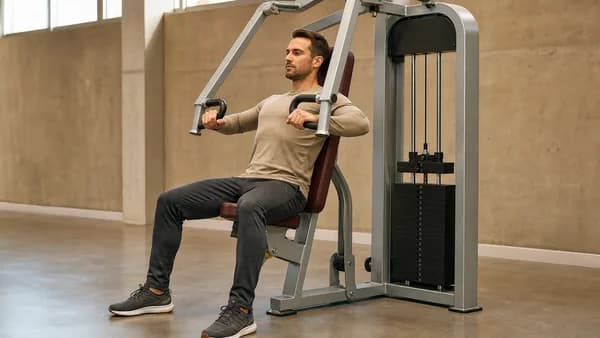
- Day 1: bench press or chest press 3x8 to 12, lat pulldown 3x8 to 12, leg press 3x10 to 12, seated row 2x10 to 12, plank 3x20 to 40 seconds.
- Day 2: goblet squat 3x8 to 12, dumbbell shoulder press 3x8 to 12, Romanian deadlift 2x8 to 10, cable row 3x10 to 12, dead bug 3 controlled rounds.
- Day 3: incline dumbbell press 3x8 to 12, assisted pull-up or pulldown 3x8 to 12, split squat 2x8 each side, leg curl 2x10 to 15, side plank 2 rounds each side.
Choose your phone
Put this advice into your next workout
Track the sets, loads, and progress behind what you just learned—without rebuilding the plan from memory.
iOS is available now. Android launch notifications are open.
How to Choose Starting Weights
Decision rule: if you cannot control the last 2 reps, reduce the load. If all sets feel smooth for two sessions in a row, add a small amount of weight or one extra rep. For more detail, use the when to increase weight guide instead of guessing from ego or soreness. The goal is steady practice, not proving strength on day one.
Technique, Progression, and Recovery
Keep every rep boring in the best way: controlled lowering, stable feet, full range you can own, and no bouncing through pain. Machines are useful early because they reduce balance demands while you learn how pushing, pulling, squatting, and hinging should feel. Free weights can come in gradually once the basic movement pattern is consistent.
Progression should be small. A beginner can often add reps before adding load, but not every week will move upward. Sleep, stress, food, and missed sessions all change performance. Instead of changing the whole routine when one day feels weak, repeat the week and check whether the trend improves over 2 to 3 sessions.
Mistakes to Avoid
Avoid training every day in the first month. More sessions can look disciplined, but they often create soreness that breaks consistency. Avoid copying advanced split routines before you can recover from simple full-body work. Avoid skipping leg training, because strong legs and hips support most gym goals. Also avoid chasing sweat as proof; a cleaner set and a repeatable week matter more.
The other mistake is treating nutrition like a separate project. You do not need a harsh diet, but you do need enough protein, water, and regular meals. If fat loss is also a goal, reduce random snacks first before cutting training energy too aggressively.
Food, Recovery, and Tracking
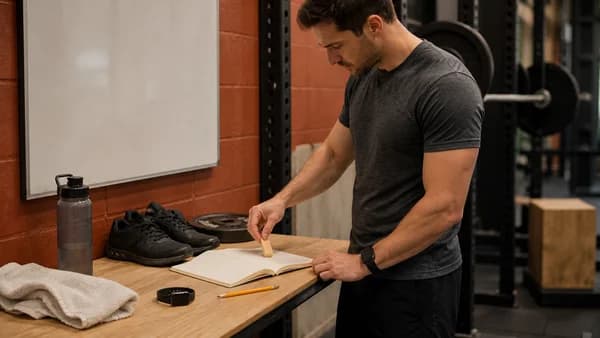
After each workout, record the exercise, weight, reps, rest time, and one short note about effort. This workout log checklist shows what matters when the numbers stop moving. Tracking protects you from repeating the same weight for months or adding load too quickly because you forgot last week's form.
You can keep the plan practical by tracking beginner workouts in Rukn Fitness so each session, set, and note is ready for the next decision. Use the first 4 weeks to build the habit. If you finish most sessions, recover well, and add a few reps or small weight increases, the plan is working.
Sources
Choose your phone
Keep training with the app
Track every set, follow smarter progressions, and bring your workout plan with you when you leave the article.
iOS is available now. Android launch notifications are open.