Weekly Workout Schedule for Beginners: A Realistic First Plan
Build a weekly workout schedule for beginners with strength, cardio, recovery, tracking rules, and simple fallbacks for busy weeks.
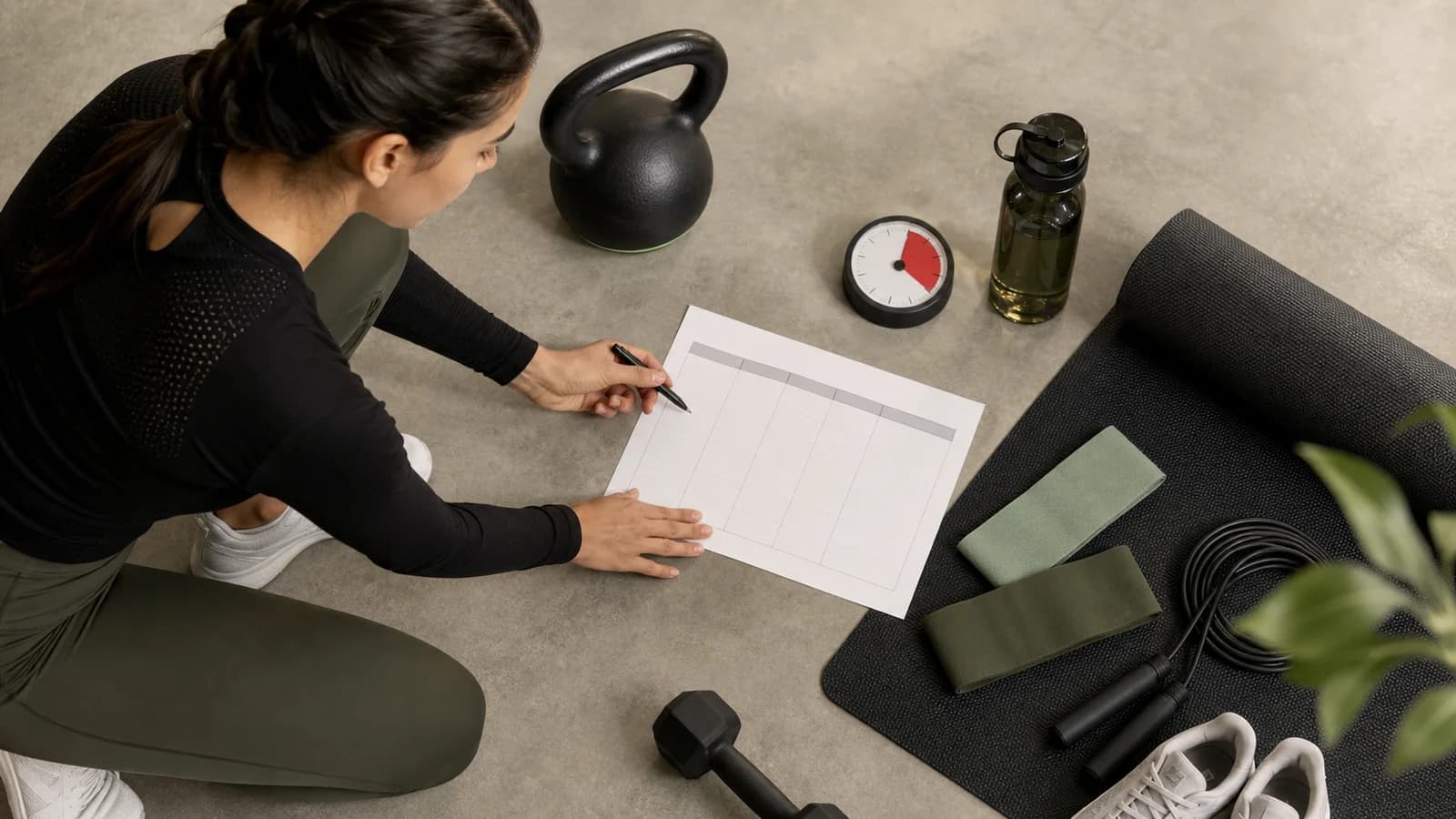
The best weekly workout schedule for beginners is not the one with the most sessions. It is the one you can repeat, review, and gently improve. A good first week should teach your body the rhythm of training without making every normal life event feel like a failure. That means enough structure to remove guesswork, but enough space to recover, work, study, travel, pray, parent, or sleep.
Start with a week you can repeat
For the first month, judge the schedule by completion before ambition. If five training days look exciting on Sunday but collapse by Wednesday, the plan is too large for its job. Start with two strength anchors, one or two easy cardio or mobility days, and at least one full rest day. This gives you practice, not punishment.
The public-health target can sit in the background while your first week stays realistic. The World Health Organization recommends adults build toward regular aerobic activity and muscle-strengthening work on two or more days, but beginners do not need to reach the full picture in week one. NIDDK gives the better starting mindset: start slowly, add a little at a time, set a specific goal, and put it on the calendar.
Put strength, cardio, and recovery in the right places
Think of the week as three different jobs. Strength sessions teach movement patterns and build muscle. Cardio sessions build your engine and add low-pressure health work. Recovery days make the next session possible. When all three jobs compete on the same day, beginners often confuse fatigue with progress.
If you lift and do cardio in the same session, choose the order by the goal of that day. A beginner who wants better squat, press, or row technique should usually lift before hard cardio. A beginner training for a walk, run, or sport session may put easy strength later. For more detail, use the guide on choosing cardio before or after weights when your weekly plan starts mixing both.
Use this beginner weekly schedule
Here is a simple first week: Monday full-body strength, Tuesday brisk walk or easy bike, Wednesday rest or mobility, Thursday full-body strength, Friday optional light technique or stretching, Saturday longer easy cardio, and Sunday rest. The strength days should use basic pushes, pulls, squats or hinges, and core work. Keep most sets comfortable enough that you could repeat the plan next week.
Choose your phone
Put this advice into your next workout
Track the sets, loads, and progress behind what you just learned—without rebuilding the plan from memory.
iOS is available now. Android launch notifications are open.
If you only have three days, keep Monday strength, Wednesday walk or mobility, and Friday strength. If you only have two days, keep two full-body strength sessions and add short walks wherever life allows. The optional day is a bonus, not a debt. A beginner schedule works when the important days survive the messy week.
Track the signals before adding more
After each workout, write down the completed exercises, sets, reps, effort, soreness, energy, and whether you were ready for the next planned session. That small review matters more than guessing from memory. If you want a fuller checklist, the Rukn Fitness article on what to track in a workout log explains which notes help you adjust without overreacting.
This is where Rukn Fitness fits naturally: use a simple place to plan and review the week so the schedule is not scattered across memory, screenshots, and random notes. After two consistent weeks, add one small change: five to ten minutes more cardio, one extra set on a main exercise, or one optional practice day. Do not add all three at once.
Adjust when life gets busy
Real schedules bend. During travel, exam weeks, family pressure, long workdays, or fasting periods, keep the two strength anchors and shorten the rest. The Ramadan routine guide is useful beyond Ramadan because it shows how to protect training when energy and meal timing change. The same principle works for any season with unusual demands.
If you miss a session, do not cram three workouts into the next two days. Resume at the next anchor day, then review the week honestly. If soreness lasts more than two days, sleep is poor, or motivation drops sharply, hold the schedule steady instead of adding work. If you complete two weeks with stable energy and clean technique, progress the plan by the smallest useful step.
Sources
This beginner schedule uses the activity targets from the World Health Organization, starting guidance from NIDDK, and the 2026 ACSM message that consistency and training major muscle groups matter more than a complicated perfect plan in ACSM's resistance training update.
Choose your phone
Keep training with the app
Track every set, follow smarter progressions, and bring your workout plan with you when you leave the article.
iOS is available now. Android launch notifications are open.