Warm-Up Sets for Strength Training: Ramp Up Without Wasting Energy
Learn how many warm-up sets to use, when to add or cut ramp-up sets, and how to reach your first hard set ready instead of tired.
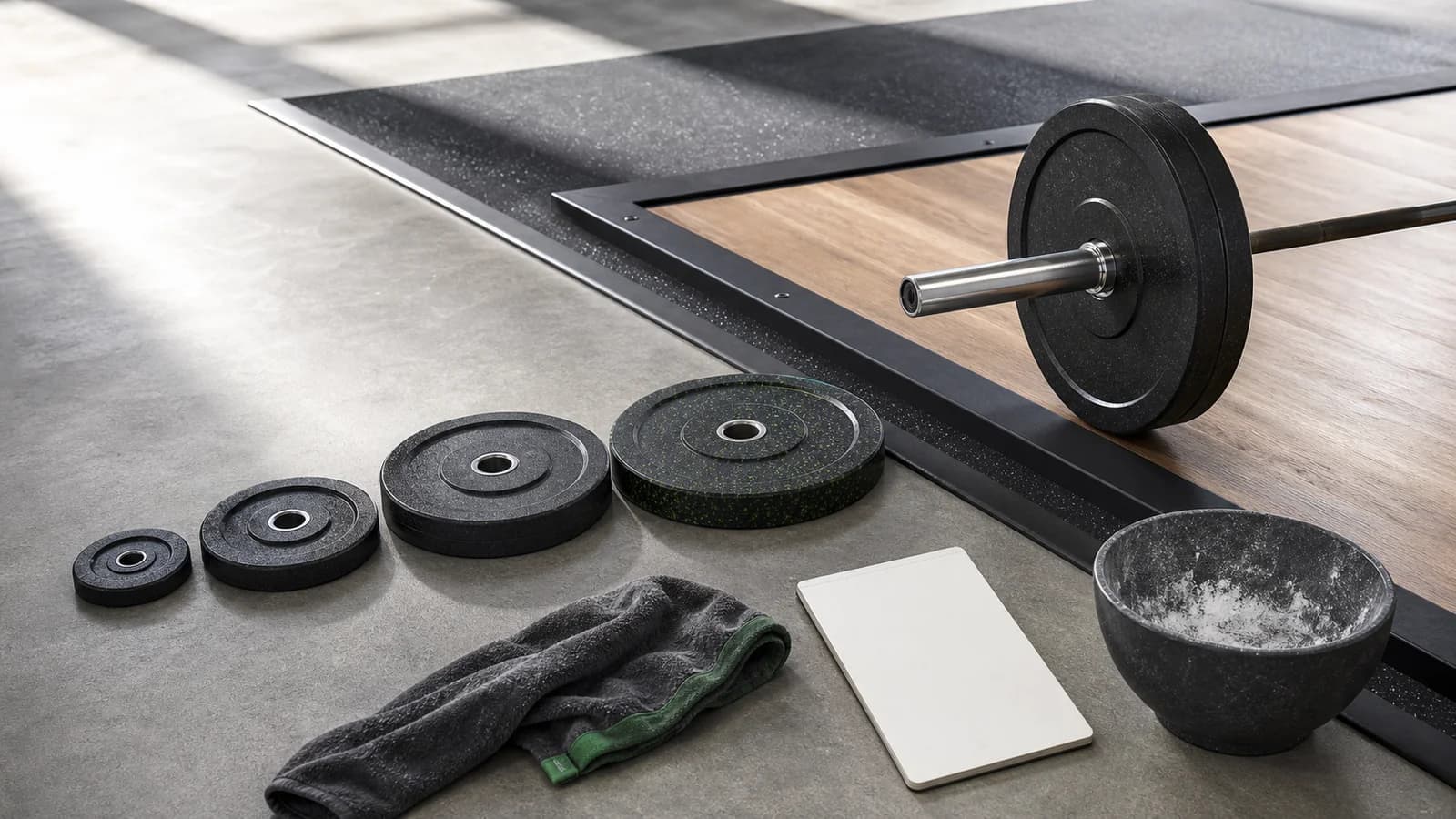
Warm-up sets are the bridge between moving around and lifting with intent. A general warm-up can raise body temperature, but warm-up sets teach the exact lift of the day: the groove, the brace, the bar path, and whether the planned weight feels realistic. The goal is not to collect extra volume. The goal is to make the first hard set feel familiar before it counts.
Quick Answer: Warm Up Until the First Hard Set Feels Predictable
Use 1-2 warm-up sets for a familiar moderate machine or isolation lift, 2-4 for most compound lifts, and 4-5 when the first lift of the day is heavy, technical, or near a personal best. Keep the early sets easy, cut the reps as the weight rises, and stop every warm-up set with plenty in reserve. If the first working set still feels shocking, add one bridge set next time. If the warm-up makes your first working set worse, keep the jumps but reduce warm-up reps.
That answer is practical because warm-up research supports preparation without proving that more warm-up work is always better. A 2010 systematic review on warming up found performance benefits in most included outcomes, but the useful decision for lifters is dosage: enough rehearsal to feel ready, not so much that the warm-up becomes hidden fatigue.
Build a Ramp, Not a Second Workout
A clean ramp starts light enough to practice position and ends close enough to the working weight that the first hard set does not surprise you. For a bench press work set around 80 kg, that might look like the empty bar for 8-10 smooth reps, 40 kg for 5, 60 kg for 3, then 70 kg for 1-2 before the first work set. For a leg press after squats, one lighter feeler set may be enough because the legs are already warm.
Research translation: the mistake is doing too many reps on every step. Ten reps with the empty bar is rehearsal; ten reps at 70-80% of the work weight can become another working set. A small resistance-training study where 15 participants, all men, performed bench press, squat, and arm curl at 80% of 1RM found no clear repetition or fatigue advantage from different warm-up procedures, which is a useful reminder: if the warm-up does not improve the work sets, simplify it.
Match Warm-Up Sets to the Lift, Load, and Day
Use more ramp-up sets when the exercise is first in the session, uses several joints, has a long range of motion, or will be loaded heavy. Use fewer when the movement is simple, the target reps are high, or a related lift already prepared the same muscles. ACSM's 2026 resistance-training position stand synthesizes evidence from 137 systematic reviews covering more than 30,000 participants; for a lifter building a practical warm-up, the takeaway is still local and simple: heavier or more technical work deserves smaller jumps before the first hard set.
Choose your phone
Put this advice into your next workout
Track the sets, loads, and progress behind what you just learned—without rebuilding the plan from memory.
iOS is available now. Android launch notifications are open.
Static stretching is not the same as ramping up. In a systematic review of 106 studies, Kay and Blazevich reported that short static stretches were far less likely to hurt performance than long holds, while stretch durations of 1 minute or more were more often linked with strength and power reductions. If a stretch helps you reach a position, keep it brief and follow it with movement-specific warm-up sets before judging the working weight.
Use the First Hard Set as Your Diagnostic
The first working set tells you whether the ramp worked. If the target set lands around the expected effort, your warm-up did its job. If the first rep feels unstable, the bar path changes, or the set suddenly becomes a grind, the issue may be a missing bridge set rather than weak motivation. This is where reps in reserve can keep the first set honest: a set planned at 2 RIR should not feel like a surprise max attempt.
Do not use a smooth warm-up as permission to add weight early. Warm-up sets are rehearsals, not proof that the whole session is ready for a jump. If your working sets beat the rep target with stable form for more than one session, then review when a load increase actually makes sense. The better rule is simple: warm up to reveal readiness, then progress from completed work sets.
Log the Pattern, Then Adjust Next Session
Use a simple checklist for the easiest warm-up plan to repeat and refine: record the final warm-up jump, how the first work set felt, and whether any warm-up set created fatigue. Over two or three sessions, patterns show up quickly: maybe squats need one extra single before the work weight, while rows only need one feeler set after deadlifts.
This is also where Rukn Fitness fits naturally. When your session history keeps warm-up notes beside working sets, it is easier to spot whether a bad first set came from a rushed ramp, poor recovery, or an unrealistic load jump; the same habit pairs well with a workout log that tracks the details that change decisions. Use your training history in Rukn to adjust the ramp before the next session instead of rebuilding the plan from memory.
Sources
- Fradkin, Zazryn, and Smoliga, Effects of Warming-up on Physical Performance: A Systematic Review With Meta-analysis.
- Kay and Blazevich, Effect of Acute Static Stretch on Maximal Muscle Performance.
- American College of Sports Medicine, ACSM Resistance Training Guidelines Updated for First Time in 17 Years.
- Ribeiro et al., Effect of Different Warm-up Procedures on the Performance of Resistance Training Exercises.
Choose your phone
Keep training with the app
Track every set, follow smarter progressions, and bring your workout plan with you when you leave the article.
iOS is available now. Android launch notifications are open.