What to Do When You Miss a Workout
Missed one or two workouts? Use a simple decision guide to skip, move, shorten, or combine sessions without turning one busy week into lost progress.
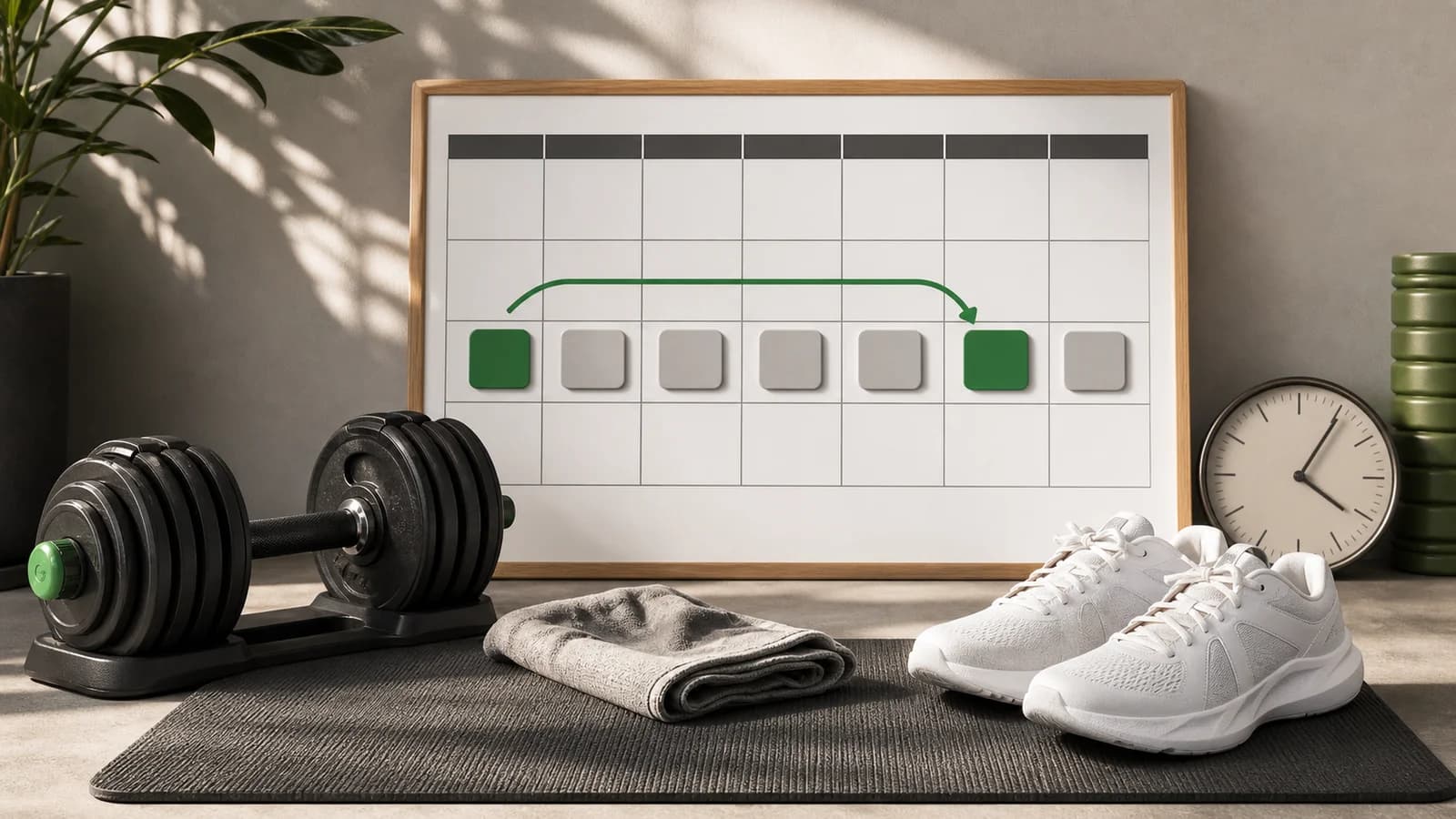
Missed workouts feel bigger than they usually are. One skipped session can make the whole week feel broken, especially if you are trying to build momentum as a beginner or intermediate lifter.
The fix is not guilt, punishment, or cramming every missed set into the next gym visit. A useful missed workout plan protects three things: enough weekly stimulus to keep progress moving, enough recovery to train well, and a clear signal from the next session.
Use this decision guide when you missed one or two planned workouts and need to decide what to do next.
First, name the workout you missed
Before changing the plan, name the miss clearly. Did you miss a full-body strength day, an upper or lower session, a lighter accessory day, or a cardio day? Did it happen because of time, sleep, soreness, travel, stress, or illness?
That context matters more than the calendar. Missing a hard lower-body session after three poor nights of sleep is different from missing an easy accessory workout because a meeting ran late.
The CDC gives a broad health floor: adults need 150 minutes of moderate activity or 75 minutes of vigorous activity weekly, plus two days of muscle-strengthening work. For lifters, that does not mean every week must be perfect. It means your recovery plan should keep you near a reasonable weekly floor instead of letting one missed session become five inactive days.
Your first job is to identify the training value that was lost. Was it a major muscle group exposure, a heavy practice lift, a small pump session, or just extra activity? Once you know that, the decision gets easier.
Use the four-choice rule
Use this order: skip, move, shorten, combine. Do not start with combine everything, because that is how one missed workout becomes a bloated session that ruins the next two.
Skip the workout when it was low priority, your week already included enough work for that muscle group, or recovering it would crowd the next important session. If you missed an optional arm day but already trained upper body twice, skipping is probably the cleanest choice.
Move the workout when it was important and there is a clear open slot within the next two or three days. This works best when the moved session does not place two hard sessions for the same area back to back.
Shorten the workout when the session matters but time or recovery is limited. Keep the main lift or main movement pattern, then choose one or two high-value accessories. A 25-minute version of the right workout is usually better than abandoning the week.
Combine only when the overlap is small and recovery still makes sense. A missed push session can sometimes merge with a pull session if volume is trimmed. Heavy squats plus heavy deadlifts plus another leg day tomorrow is usually a bad trade.
If the whole week needs rearranging, use a rebuilt-week mindset instead of improvising day by day. A guide to rebuilding the week around beginner-friendly training days can help you place sessions in an order that still respects recovery.
Protect the next clean signal
The most overlooked part of a missed workout plan is the next session's data. If you cram too much into one day, performance drops for reasons that are hard to read.
Was the weight too heavy, did the program stop working, or were you just tired because you doubled the workout? You lose the clean signal that tells you what to adjust.
Choose your phone
Put this advice into your next workout
Track the sets, loads, and progress behind what you just learned—without rebuilding the plan from memory.
iOS is available now. Android launch notifications are open.
ACSM's 2026 resistance training update reinforces a practical idea: consistency matters more than unnecessary complexity, and training all major muscle groups at least twice weekly is a useful target for most adults. The goal is not to pay back every missed set. The goal is to restore a repeatable rhythm quickly.
This is where your log beats memory. Look at the last seven to ten days: exercises completed, sets, reps, loads, soreness, sleep, and missed sessions. If you are not sure what to change, start by using evidence from your workout log instead of guessing from how the week feels.
Apply it to common schedules
If you missed one workout in a three-day full-body plan, move it if you can still keep a rest day before the next hard session. If not, skip it and continue with the next planned workout. Full-body plans already spread stimulus across the week, so one miss is rarely a crisis.
If you missed an upper day in a four-day upper/lower plan, move it into the next open day if it does not collide with another upper session. If the week is packed, shorten it: press or row, one secondary movement, one small accessory, done.
If you missed a lower day, be more careful about combining. Heavy leg training creates more fatigue for many lifters. Shorten the lower day before you merge it with another hard lower session. Keep the main squat, hinge, or single-leg pattern and cut the extra volume.
If you missed two sessions, stop trying to save the original week. Choose the next two workouts that cover the biggest gaps, then resume normal training. For most lifters, that means one lower-focused session and one upper or full-body session, not a marathon catch-up day.
The 2022 JAMA Internal Medicine weekend-warrior cohort found that adults who met weekly activity targets in one or two sessions had similar mortality associations to those who spread activity across more days. That is encouraging for busy people, but strength training still has a recovery cost. The lesson is not to cram all heavy lifting into one day. It is that imperfect distribution can still help when total weekly activity is protected.
Write the next session before you move on
Once you choose skip, move, shorten, or combine, write down the actual next session. Do not leave it as catch up tomorrow. Decide the workout, the first exercise, the minimum effective version, and what you will cut if time runs short.
For example: tomorrow is upper body; bench press, row, overhead press, pulldown. If the session drops under 35 minutes, cut curls and lateral raises. That is a plan. Make up Monday is just vague debt.
This is a practical place to use Rukn Fitness on iPhone: open your week, log what actually happened, and plan the next session from the lifts you still need to cover. You are not trying to build a perfect historical record. You are making the next workout easier to start.
If missed sessions keep happening, treat that as useful feedback. Your plan may need fewer training days, shorter default workouts, or a better exercise order. A missed workout is a data point, not a verdict: protect the week, protect recovery, and protect the next clean signal.
Sources
Research context came from the CDC adult activity overview, the ACSM 2026 resistance training guideline update, and the JAMA Internal Medicine weekend-warrior cohort.
Choose your phone
Keep training with the app
Track every set, follow smarter progressions, and bring your workout plan with you when you leave the article.
iOS is available now. Android launch notifications are open.