Zone 2 Cardio for Beginners: How to Start Without Hurting Strength
A practical zone 2 cardio guide for beginners who lift: use the talk test, place easy cardio around strength, and progress without burnout.

Most beginners hear "zone 2 cardio" and assume they need a lab test, a perfect watch, or a complicated heart-rate formula. That makes an easy habit feel harder than it should. For a strength trainee, the useful version is simpler: choose cardio that is easy enough to repeat, controlled enough that it does not steal from lifting, and measurable enough that next week can be adjusted.
The quick answer: easy enough to repeat
Start with two or three zone 2 sessions of 20-30 minutes. Keep the pace conversational: you can speak in full sentences, but singing would feel uncomfortable. If your watch shows heart-rate zones, use them as a guide, not a verdict. The American Heart Association describes moderate activity as roughly 50-70 percent of maximum heart rate, but beginners can drift above or below that number based on heat, caffeine, stress, sleep, and fitness.
- If breathing is smooth and you can talk, stay there.
- If you can sing easily, increase the pace a little.
- If you can only answer in short phrases, slow down.
- If leg fatigue changes tomorrow's lifts, reduce the next cardio session before blaming the strength plan.
Use the talk test before you trust a zone number
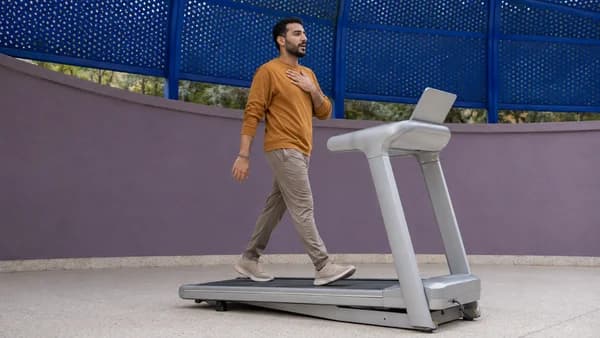
Zone 2 is valuable because it builds repeatable aerobic work, not because a device colored a workout blue or green. The CDC's talk test is a better first filter for beginners: moderate-intensity activity lets you talk but not sing, while vigorous work makes more than a few words difficult. That matters because a new lifter can turn a harmless incline walk into a hidden hard session by chasing a number.
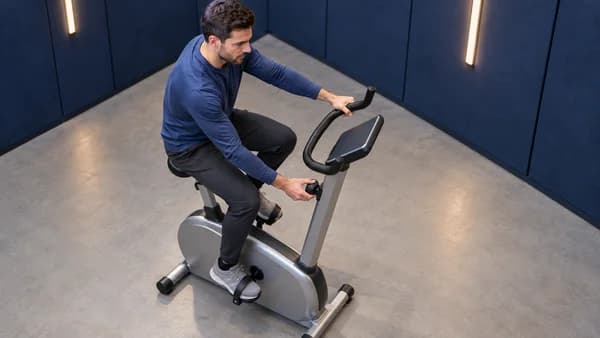
A treadmill walk, bike, elliptical, rower, or outdoor walk can all work. The best choice is the one you can repeat without joint irritation, soreness that changes your next lift, or a mental fight every time it appears on the calendar. If you are still building the week itself, place cardio inside a realistic beginner weekly workout schedule before worrying about perfect zones.
The weekly health target gives useful perspective. The CDC recommends 150 minutes of moderate-intensity aerobic activity per week, or 75 minutes of vigorous activity, plus muscle-strengthening work on 2 or more days. That does not mean a beginner has to jump straight to 150 minutes. It means two 20-minute easy sessions are a start, not a failure, and they can grow without replacing strength training.
Place zone 2 around strength, not against it
If lifting progress matters, treat zone 2 as support work. Put it after an upper-body session, on a separate day, or several hours away from hard lower-body training when possible. If you only have one training window, lift first when strength is the priority, then finish with easy cardio that still feels controlled. For the exact order tradeoff, the guide on cardio before or after weights gives a useful decision frame.
Choose your phone
Put this advice into your next workout
Track the sets, loads, and progress behind what you just learned—without rebuilding the plan from memory.
iOS is available now. Android launch notifications are open.
Concurrent training research is more nuanced than "cardio kills gains." A 2021 systematic review and meta-analysis found that explosive strength was more likely to be blunted when aerobic and strength work happened in the same session, while sessions separated by at least 3 hours showed less of that issue. The practical decision is not to fear cardio; it is to avoid turning every lower-body day into lifting plus hard conditioning.
Use this simple weekly placement rule: easy cardio can sit near lifting, hard cardio needs more space. A 25-minute conversational walk after upper body is usually fine. Thirty minutes of steep incline walking after heavy squats might still be too much if your next leg day loses quality. The test is the next workout, not how disciplined the cardio session felt.
Progress with time, not speed
The safest way to build zone 2 is to add minutes before intensity. Keep the pace similar for two weeks, then add 5-10 minutes to one session if sleep, soreness, and lifting performance are stable. Once you can repeat 30-40 minutes comfortably, add another weekly session or slightly raise the pace while keeping the talk test intact.
For a simple week, try upper body plus a 25-minute easy walk on Monday, lower body with no cardio on Tuesday, a 30-minute bike or indoor walk on Thursday, and a short optional walk after Saturday's lift. In hot climates or busy cities, an indoor treadmill, mall walk, stationary bike, or shaded evening route is still valid zone 2 if the talk test stays in range.
This is where logging makes zone 2 useful instead of vague. In Rukn Fitness, you can keep the cardio dose beside your lifting week, then review whether extra minutes helped energy or quietly made workouts heavier. Pair that with a simple workout log so you can compare the next squat, press, or run of daily steps against what you actually did.
A beginner does not need a heroic cardio block. You need a repeatable aerobic floor that makes training feel easier over months. Start with 40-90 total minutes per week, keep most of it talkable, and only add more when your lifting sessions still look clean. Zone 2 should make the week more durable, not more dramatic.
Sources
- CDC adult physical activity guidance for the 150-minute weekly moderate activity target and 2-day strength baseline.
- CDC measuring physical activity intensity for the talk test and moderate-intensity examples.
- American Heart Association target heart rates for the 50-70 percent moderate-intensity heart-rate range.
- Schumann et al. concurrent training meta-analysis for the same-session versus separated-session strength-power context.
Choose your phone
Keep training with the app
Track every set, follow smarter progressions, and bring your workout plan with you when you leave the article.
iOS is available now. Android launch notifications are open.