45-Minute Gym Workout Plan: Keep the Main Lift, Cut the Drift
Use a 45-minute gym workout plan that protects the main lift, pairs accessories intelligently, cuts drift, and logs the next progression decision.
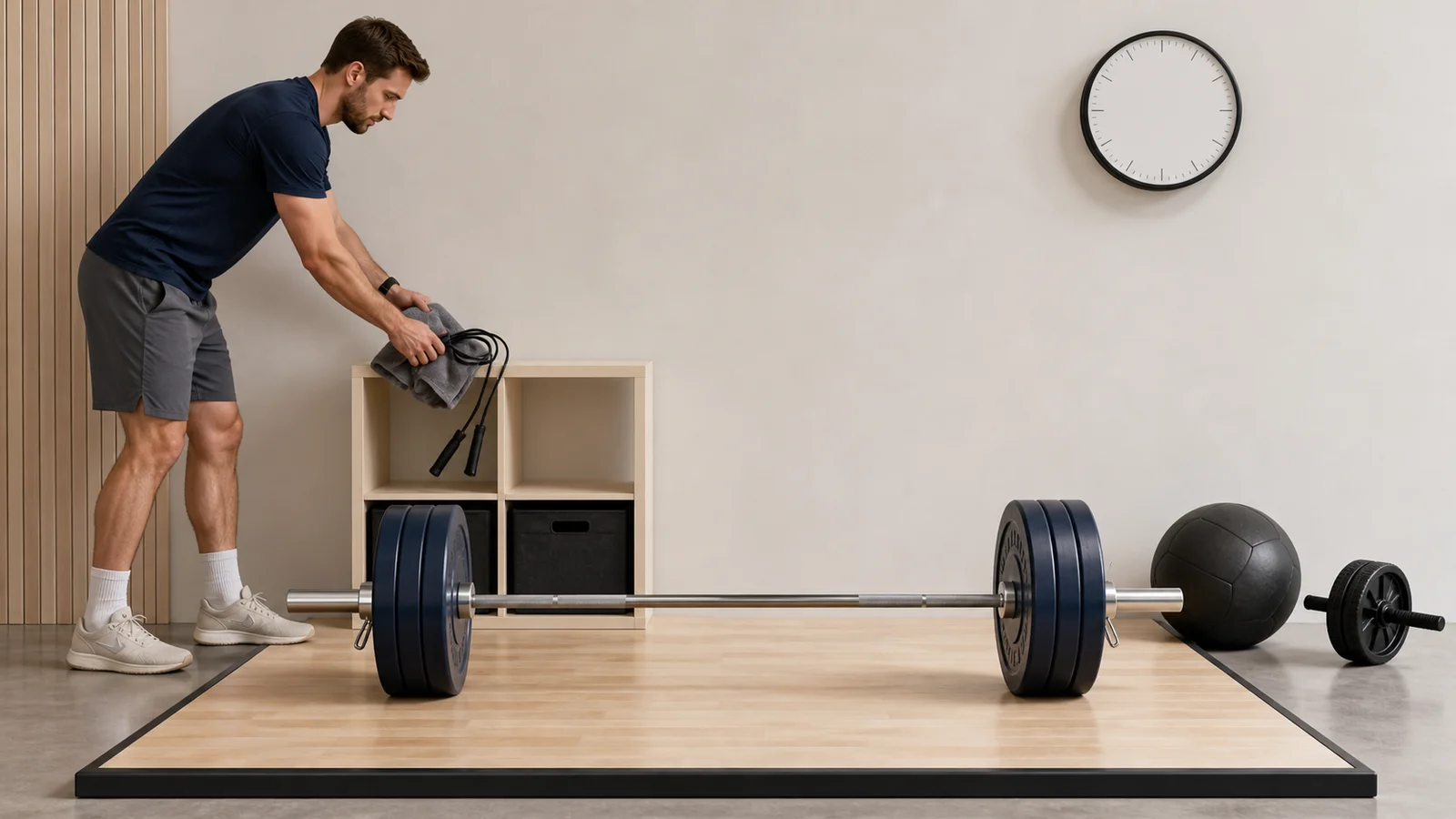
A 45-minute gym workout plan should not feel like a race through random exercises. The point is to spend the limited time where it protects progress: one main lift, a small accessory pair, a clear cut-list, and a short log before you leave.
The 45-Minute Session Map
Use the 45 minutes like a budget. Spend the first 5 minutes on a specific warm-up for the main lift, not a full-body warm-up that belongs to another goal. Spend minutes 5-25 on the main lift, minutes 25-38 on a non-competing accessory pair, minutes 38-43 on an optional small finisher, and the final 2 minutes recording the next action.
That map is flexible, but the order is not random. If the lift that matters most today is a trap-bar deadlift, squat, bench press, row, or leg press, it goes first while focus and setup are fresh. The accessory pair comes later because it is easier to compress without hiding whether the main lift improved.
Example week: Monday squat, Wednesday bench press, Friday leg press; each session keeps one main lift and one accessory pair.
Choose the Main Lift Before You Cut Anything
The time-efficient training review recommends at least 4 weekly sets per muscle group and a practical 6-15RM loading range for many efficient strength-and-hypertrophy plans. The useful lesson is not that every muscle needs all its work in this one session. It is that the session needs one lift whose output you can compare next week.
Give that lift enough rest to stay honest. If you rush heavy sets just to fit more exercises, the shorter workout becomes harder to interpret. When the main lift feels cramped, read Rukn's guide on rest time between sets and protect the rest that keeps reps, form, and effort comparable.
Decision rule: if cutting rest makes next week unreadable, cut a later accessory or finisher first.
Pair Accessories That Do Not Fight the Main Lift
After the main lift, save time with accessories that do not steal the same muscle, breath, or setup focus. Pair a push with a light row, a hinge with a core drill, or an upper-body isolation move with a low-fatigue mobility drill. Keep the pair smooth enough that neither exercise turns into sloppy conditioning.
Choose your phone
Put this advice into your next workout
Track the sets, loads, and progress behind what you just learned—without rebuilding the plan from memory.
iOS is available now. Android launch notifications are open.
The time-efficient review notes that supersets, drop sets, and rest-pause methods can roughly halve training time while maintaining volume, but they are better used after the priority work is protected. If you want a deeper rule for pairing exercises, use the Rukn article on supersets without losing strength before you compress heavy work.
Research translation: compress accessories, not the main lift.
Cut the Drift, Not the Signal
When the clock gets tight, cut drift first: scrolling between sets, broad warm-ups, extra isolation work that was not in the plan, and finishers that only make the session feel harder. Do not cut the main lift, all rest, or the final log before those low-value pieces disappear.
Mistake to avoid: do not turn the last 15 minutes into random equipment sampling.
WHO guidance asks adults to include muscle-strengthening work on 2 or more days per week, but it does not say one perfect session duration unlocks results. A repeatable 45-minute plan across the week beats one overloaded session that you cannot recover from or repeat.
Use the Two-Minute Log to Make Next Week Faster
Before you leave, record the main lift, load, reps, effort, rest, and the next action: add, repeat, reduce, or cut. That small review makes the next 45-minute session faster because you are not rebuilding the plan from memory.
This is where Rukn Fitness fits naturally. If you track the session in the two-minute next-session note in Rukn Fitness, keep the note short and practical: main lift result, accessory pair result, and next move. For a sharper logging habit, read workout log mistakes so the record explains the decision instead of only storing numbers.
Sources
Choose your phone
Keep training with the app
Track every set, follow smarter progressions, and bring your workout plan with you when you leave the article.
iOS is available now. Android launch notifications are open.