How Long to Rest Between Sets for Strength and Muscle
Use a practical rest-time rule that keeps heavy sets measurable, accessories efficient, and progression decisions honest.
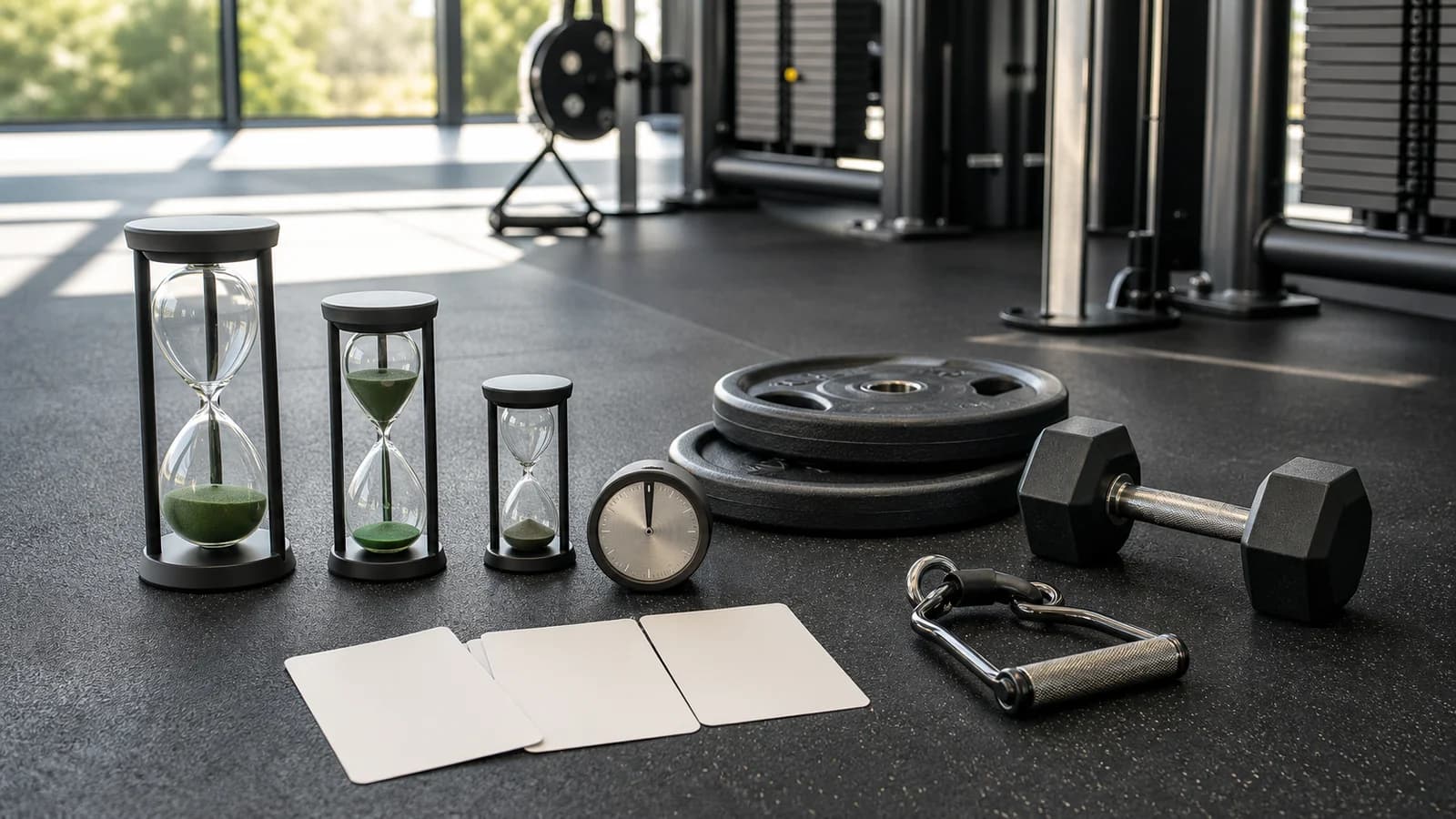
Most lifters ask how long to rest between sets because standing still feels wasteful. The better question is whether the next set will still tell the truth. Too little rest can make a missed rep about breathing and coordination, not strength. Too much rest on every accessory only slows the session.
Quick answer: rest until the next set is readable
For strength and muscle gain, rest long enough to compare reps, form, and effort with the previous set. Start heavy compound lifts around 2-3 minutes, use 1-2 minutes for easier assistance work, and extend when the next set would become a conditioning test. Aim for the shortest break that keeps the signal clean.
Decision rule: if the set is a heavy squat, press, deadlift, row, or lift you judge for progression, give it more recovery before repeating it. If it is a cable curl, lateral raise, machine fly, or controlled accessory, shorter rest is fine while the target muscle still does the work. If reps drop because your lungs are rushing, the rest was too short for that job.
Heavy lifts need more than pride
The ACSM position stand gives a useful baseline: at least 2-3 minutes between heavier core exercises, with 1-2 minute rests often enough for assistance work. Heavy lifts are not just local burn. They need bracing, coordination, and nervous-system freshness for the next attempt to look like the same exercise.
Use effort notes to separate fatigue from impatience. If the same weight moves from two reps in reserve to zero only because you cut the clock, you learned little about strength. Pairing rest time with a clear RPE or RIR scale makes the next weight decision less emotional.
Accessories can be shorter if output stays stable
Hypertrophy work does not always need powerlifting-style pauses. A 2024 Bayesian meta-analysis found a small muscle-growth benefit above 60 seconds, likely because lifters kept more volume load; benefit beyond about 90 seconds was less certain for size alone. Translated into practice: do not force 30-second rests on hard sets, but do not wait five minutes before every small isolation movement either.
Time-saving choices belong here. If two movements do not compete, a smart superset can keep the session dense without ruining the priority lift; the pairing rules are in Rukn Fitness’s guide to saving time with supersets without hurting strength. Rest should protect the set you care about most, then use the remaining time intelligently.
Choose your phone
Put this advice into your next workout
Track the sets, loads, and progress behind what you just learned—without rebuilding the plan from memory.
iOS is available now. Android launch notifications are open.
Use your log to choose the shortest useful rest
One trial in trained men compared 1- and 3-minute rests over 8 weeks and found better strength and hypertrophy outcomes with the longer rest condition. A separate systematic review covered 23 studies and 491 participants, a reminder not to treat one viral timer rule as universal. If the same exercise, load, and target reps repeat better with a longer rest, that rest is productive.
In Rukn Fitness, log rest style beside the set result: "2 min felt rushed," "3 min made the top set repeatable," or "90 sec fine for curls." When the same weight and reps stay clean, use that repeatability before increasing weight instead of guessing from one tired set. Workout history turns rest from mood into evidence, so use your next session notes on Rukn Fitness to test one rest change at a time.
When you change rest, keep the other variables boring. Use the same exercise, load, target reps, and set count, then change only the rest window for one or two sessions. If a crowded gym gives you a longer wait, record it and compare whether the next heavy set moved cleaner. If you shorten rest on a busy day, test accessories first instead of changing the priority lift and timer together.
Mistake to avoid: making rest a punishment
Short rest can feel disciplined because the workout hurts more. That does not make it better. If shorter rests make technique worse, turn every set into a breathless race, or hide whether the target muscle was actually challenged, they steal information from the program. Keep short rests for simple accessories, circuits, or density days; protect longer rests for lifts that decide progression.
The clean rule is this: rest enough to make the next set honest, then move on. If two minutes gives stable reps and a clean effort rating, you do not need three. If three minutes keeps a heavy set from collapsing, it is not wasted time; it is part of the training dose.
Sources
Choose your phone
Keep training with the app
Track every set, follow smarter progressions, and bring your workout plan with you when you leave the article.
iOS is available now. Android launch notifications are open.