Workout Log Mistakes: Record Decisions, Not Just Numbers
Fix workout log mistakes by recording setup, effort, recovery context, and the next action so each session tells you what to do next.
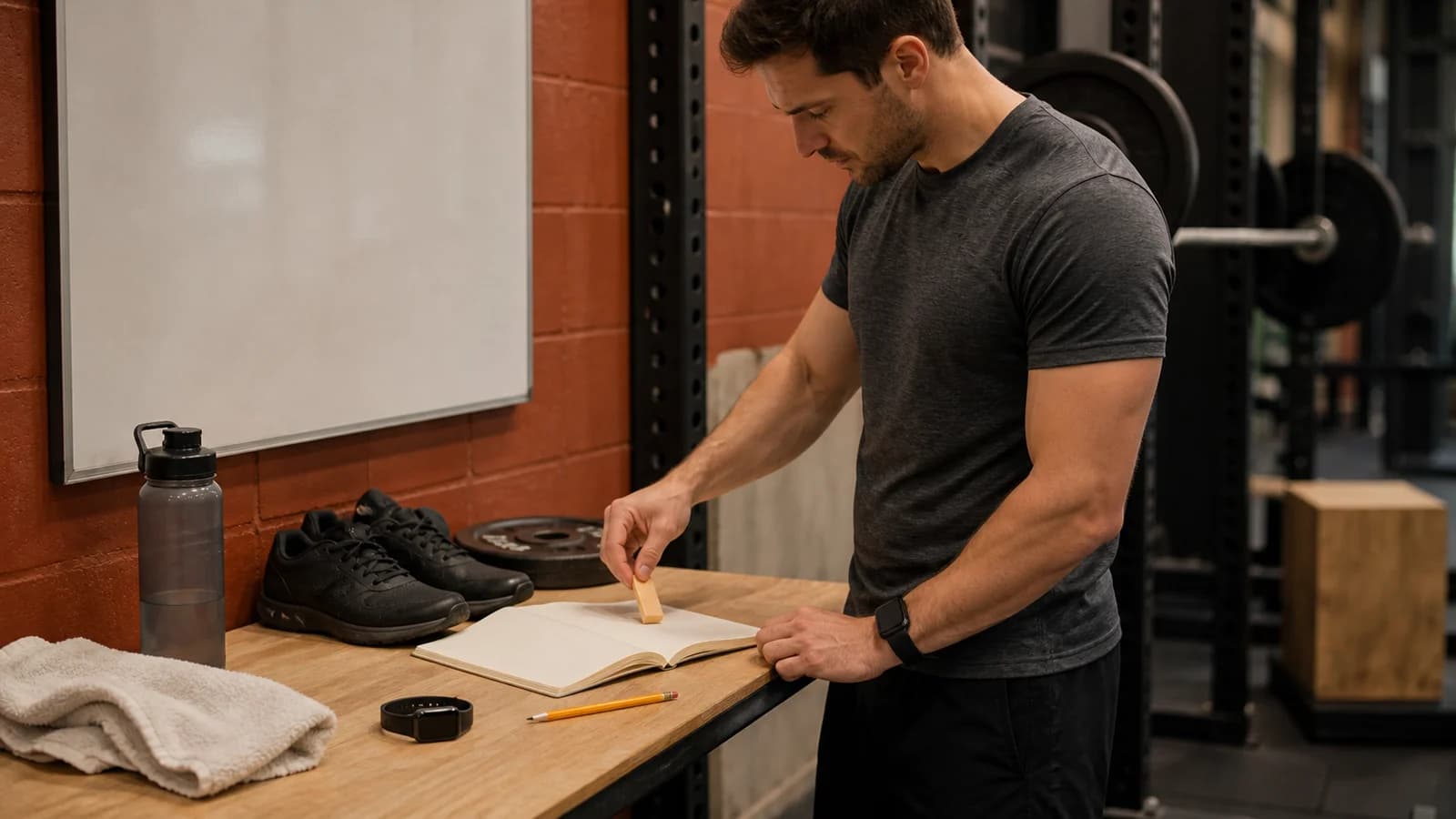
A bad workout log can look disciplined and still be almost useless. It may say bench press, 60 kg, 10 reps, but it may not say which bench angle, how much range you used, whether the last rep was clean, whether sleep was poor, or what you planned to do next. The mistake is not logging too little information. The mistake is logging information that cannot answer a future decision.
Quick Answer: Log the Decision, Not the Diary
Quick answer: record only the details that change the next session. For each important exercise, keep the exercise version, one setup cue, load, reps, effort, any unusual recovery clue, and the next action. The next action should be simple: add, repeat, reduce, or swap. If a field does not help you choose one of those four options, it is optional decoration.
Decision rule: after the workout, ask, "Could I repeat this setup and understand why performance changed?" If yes, your log is useful. If no, add the missing clue while the session is still fresh. A clean log is not a perfect diary; it is a short explanation your future self can trust.
Mistake 1: Recording Weight Without Context
Weight without context is the classic workout log mistake. A machine chest press at the same load can feel different if the seat height changed, the handles started lower, or the range of motion shortened. A dumbbell row can look stable one week and become a half-rep twist the next. If your log only says the load, you may add weight to a different movement.
Use one setup note for any exercise where the setup changes the result: seat notch, bench angle, grip, stance, tempo, range, strap use, or machine version. If you are testing a new movement, keep the old baseline visible. That is why the article on moving from machines to free weights one lift at a time pairs well here: the comparison is only fair when the log preserves the setup you are replacing.
Mistake 2: Logging Sets Without Effort
Reps are not enough if you do not know how hard the set was. A record of 10, 10, 8 can mean productive fatigue, poor rest, a rushed setup, or a load that was too heavy. Add one effort cue to your hardest working sets: estimated reps in reserve, "last rep slow but clean," "grip limited," or "target muscle lost." The cue does not need to be perfect; it needs to explain the number.
Choose your phone
Put this advice into your next workout
Track the sets, loads, and progress behind what you just learned—without rebuilding the plan from memory.
iOS is available now. Android launch notifications are open.
What the research means in practice: the 2026 ACSM position stand synthesized 137 systematic reviews and more than 30,000 participants across resistance-training outcomes. That does not mean your log needs 137 fields. It means strength training has several variables that can change the result. Load, sets, order, range, and frequency matter enough that a lifter should not treat the weight column as the whole story.
Mistake 3: Ignoring Recovery Clues
One weak day is not always a program problem. It may be poor sleep, a skipped meal, short rest between sets, soreness from a new exercise, or a hard week outside the gym. If you ignore those clues, you may reduce the plan when the plan was fine, or push progression when recovery was clearly not ready.
The weekly view matters because strength work is supposed to repeat. WHO guidance still frames adult muscle-strengthening activity around major muscle groups on 2 days or more per week. The practical point is not to chase a public-health minimum inside the gym; it is to make repeated weeks readable. When performance drops, write one recovery clue before you rewrite the workout.
Decision Rule: The Two-Minute Review
Review checklist: before you leave, label the next session. Add if setup, reps, and effort were clean. Repeat if the set was close but not clearly better. Reduce if recovery clues explain a noisy drop. Swap only if the same exercise keeps producing messy data after setup and effort are controlled. This two-minute review is where logging becomes coaching instead of storage.
Self-monitoring has evidence behind it, but the record has to be actionable. A PubMed-indexed review found 19 articles on self-monitoring with technology for physical activity; the useful translation for lifting is simple: tracking works best when the feedback changes behavior. In Rukn Fitness workout tracking, the value is not that the app stores numbers. It is that exercise history, effort notes, setup comments, and recovery clues stay close enough for the next workout to make sense.
If the log keeps telling you to change everything, your log may be too vague. Use the same exercises long enough to collect a real signal, then decide from evidence. The guide on when consistency wins over changing exercises is the natural next step once your notes can distinguish a stale exercise from a badly recorded one.
Sources
Choose your phone
Keep training with the app
Track every set, follow smarter progressions, and bring your workout plan with you when you leave the article.
iOS is available now. Android launch notifications are open.