Exercise Order for Strength Training When the Gym Is Busy
Use a priority-first exercise order when equipment is taken so a crowded gym does not hide strength progress.
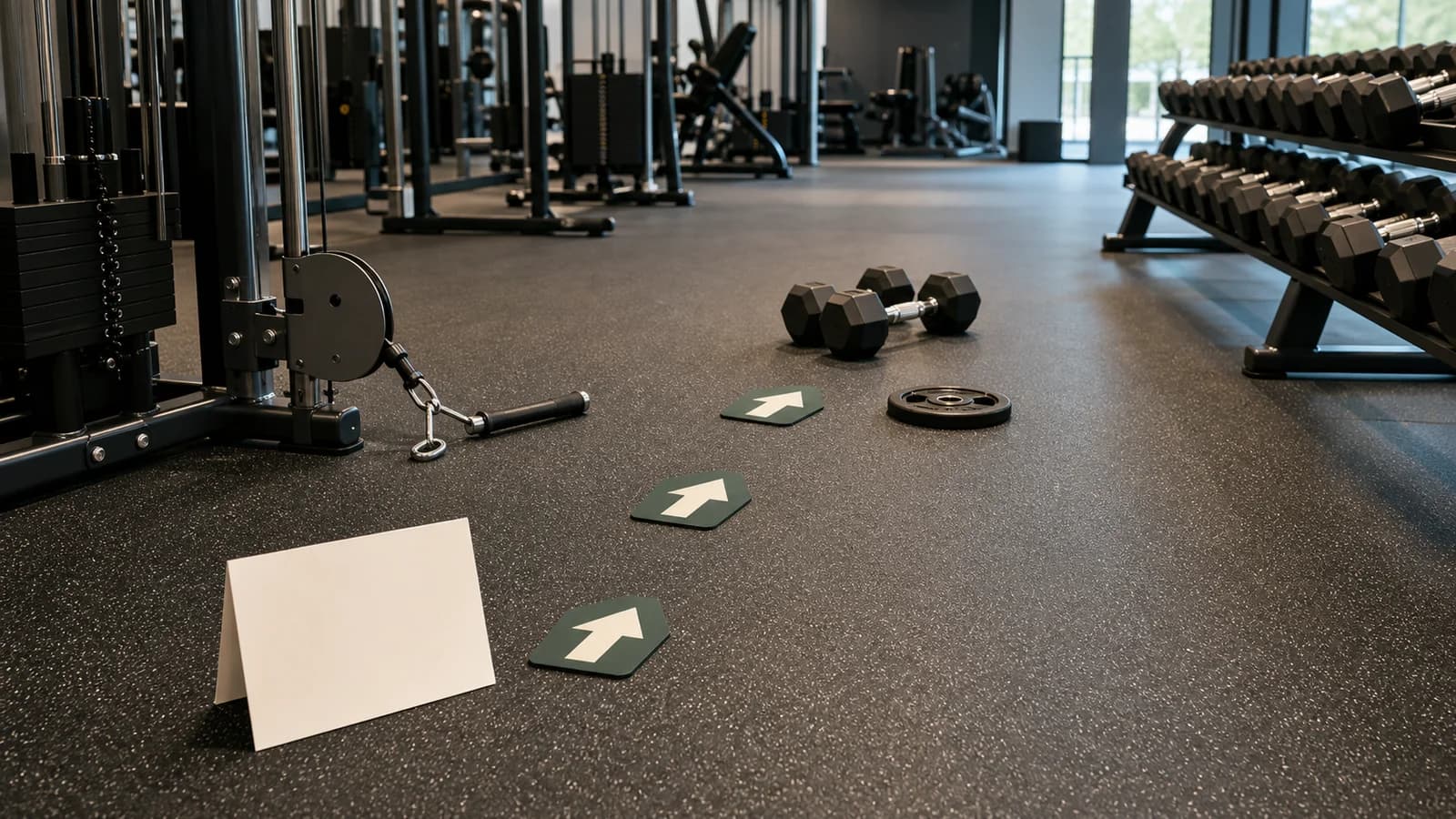
If your first station is taken, exercise order for strength training should not become a panic shuffle. The best first exercise is the one that matters most for today's goal, because the lift you do early usually gets the cleanest reps, the clearest effort signal, and the least fatigue noise. In a busy gym, the skill is protecting that priority while choosing a replacement that does the same job.
Quick answer: protect the first priority
- If today's main goal is strength, do the scored heavy lift, or the closest safe version of it, before small accessory work.
- If the exact station is taken, swap to an exercise with the same movement job, then log the swap.
- If no close swap is open, train the next priority and return to the main lift while you are still fresh enough to read the set.
That answer sounds simple, but it stops two common mistakes. First, you do not waste 20 minutes waiting for a rack, bench, or cable while your warm-up fades. Second, you do not burn your best energy on random isolation work and then wonder why the target lift felt weak. If the day is also short, use the minimum effective session rule to decide what stays in the workout and what can move.
Use a three-lane order when equipment is taken
Put every planned exercise into one of three lanes before you start: priority, close swap, and later accessory. The priority lane is the lift or movement pattern you want to improve, such as a squat pattern, press, pull, hip hinge, or specific rehab-safe variation. The close-swap lane uses different equipment but keeps the same training job. A machine chest press can protect a pressing day when benches are full; a cable row can protect a pulling day when the row bench is gone.
The later-accessory lane is useful, but it should not steal the first slot unless it is the actual goal. Lateral raises, curls, calves, and easy core work can wait because they rarely decide whether the main workout was readable. The practical test is this: if doing an exercise first would make the most important later set easier to judge, it belongs early. If it only adds pump or fatigue, keep it late.
Swap by job, not by panic
Do not swap a taken station for the first open object you see. Match the job: movement pattern, target muscle, load style, and safety. A goblet squat is not identical to a back squat, but it may preserve a squat-pattern day better than jumping to curls. A dumbbell press is not the same as a barbell bench press, but it keeps the pressing signal alive better than waiting until you are cold.
Choose your phone
Put this advice into your next workout
Track the sets, loads, and progress behind what you just learned—without rebuilding the plan from memory.
iOS is available now. Android launch notifications are open.
Crowded gyms also reward pairing choices. If your priority lift is secure and you need to save time, borrow the logic from a superset workout that protects strength: pair support work with non-competing muscles, not with the exercise you are trying to measure. A row after a press can work; a hard triceps exercise before a bench test usually muddies the result.
What the research means for your plan
The research does not say there is one sacred exercise order for every goal. A meta-analysis of 11 exercise-order studies found that strength gains tend to be largest in exercises performed early, while hypertrophy looked similar across multi-joint-to-single-joint and reverse orders. A broader exercise-order review reached the same practical idea: put the exercise that matters most to the goal earlier, regardless of whether it is big or small.
That is why the crowded-gym rule is priority-first, not always compound-first. In one 12-week trial, the exercise placed first tended to improve more, whether it was a large or small muscle-group exercise. The 2026 ACSM position stand synthesized 137 reviews and more than 30,000 participants, and it highlighted strength work with heavier loads, complete range of motion, 2-3 sets, early-session placement, and at least two weekly sessions. So the decision is not, "What looks most impressive first?" It is, "Which set needs the cleanest signal today?"
Log the order so next week stays readable
Mistake to avoid: do not treat a changed order as if the data came from the original plan. When you change the order, the workout is not ruined, but the log must say what happened. Write the actual sequence, the swap, and whether the target set felt harder, easier, or normal. That one note protects next week's decision: repeat the swap, return to the original plan, or adjust load only after the same exercise is comparable again.
This is where a training app earns its place without becoming a distraction. Use a planned-order and replacement note to save the sequence, record the replacement, and keep a short line such as "cable row before pulldown because bench was taken." When the same lift comes back cleanly, use the weight-increase checklist before adding load. The goal is not a perfect order every day; it is a workout record clear enough that a crowded gym does not hide progress.
Sources
Choose your phone
Keep training with the app
Track every set, follow smarter progressions, and bring your workout plan with you when you leave the article.
iOS is available now. Android launch notifications are open.