When to Increase Gym Weights Without Breaking Form
Use a three-signal checklist, small load jumps, and next-session review to know when to add gym weight without sacrificing form.
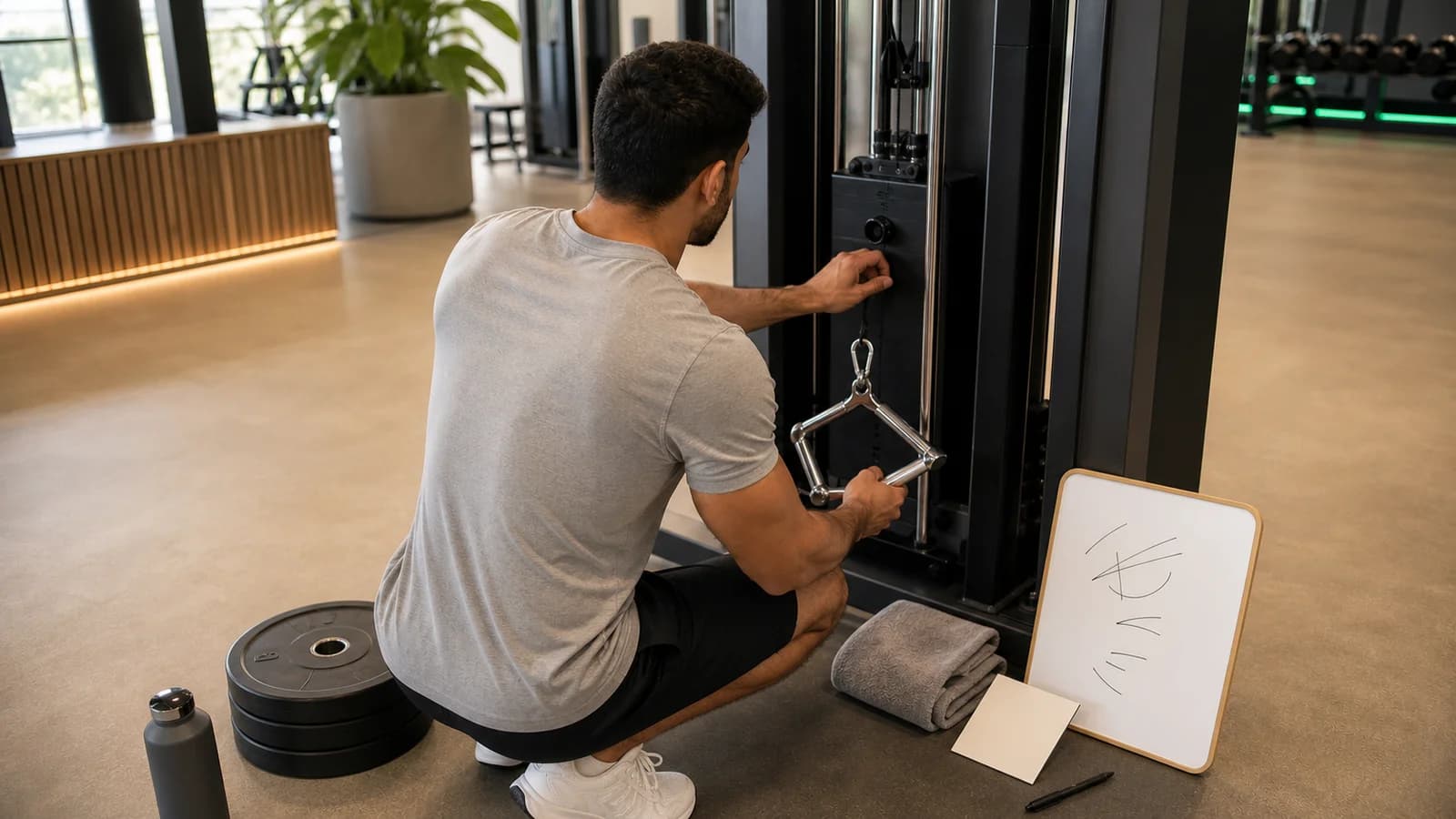
Checklist: add load only after three clean signals
You should increase weight at the gym only when three signals are clean at the same time. First, you completed the target reps with the planned range of motion. Second, the last rep stayed controlled instead of turning into a twist, bounce, or half rep. Third, the set still left enough control that next week's workout is likely to be readable. One strong day is useful feedback, but it is not automatically permission to jump.
- If all three signals are clean, add the smallest useful load next time.
- If reps were clean but effort was too high, repeat the same load and make it smoother.
- If form changed, keep the load or reduce it until the movement looks like the exercise you meant to train.
Effort is the signal lifters misread most often. A hard final rep is normal; a final rep that changes the exercise is not. If you cannot tell the difference, compare the set with a simple RPE scale for strength training before adding load. The practical rule is this: add weight when the set is hard enough to mean something, but not so hard that the heavier version will immediately hide your technique.
Use small jumps that match the exercise
The classic ACSM progression model gives a useful starting point: when you can perform the current workload for **1-2 extra reps** over the target on **2 consecutive repeat sessions**, a load jump of two to **10 percent** can make sense. In plain gym terms, that means up to **2 reps** beyond the target and the same signal across **2 sessions** before the increase. That range is not a dare. Use the lower end for small-muscle or technical exercises, and reserve the higher end for stable big movements where the plates allow it.
For a bench press, leg press, or machine row, the next load might be a small plate jump. For lateral raises, curls, or split squats, the smallest available dumbbell jump may be too large. Decision rule: if the smallest jump changes the exercise, progress by adding one clean rep, slowing the lowering phase, or improving the same weight before you chase a heavier number. The goal is not to make every workout heavier; the goal is to keep the training signal moving forward.
What the research means for load jumps
The ACSM progression stand gives the practical 10 percent, 2-rep, and 2-session guardrails; a load-specific meta-analysis explains why heavier loads matter for maximal strength when the movement stays comparable; and an **8 weeks** study on load or repetition progression shows why adding reps can still be real progression when the next load jump is too aggressive.
So the decision is not "heavier or nothing." If your form is solid and the available jump is reasonable, add load. If the jump is too big for clean reps, add reps first. If the target reps were barely there, repeat the load and make the next session clearer. Repeating a weight with better control is not wasted time; it is often the step that makes the next increase last.
Choose your phone
Put this advice into your next workout
Track the sets, loads, and progress behind what you just learned—without rebuilding the plan from memory.
iOS is available now. Android launch notifications are open.
Scenario map: add, repeat, or step back
Green signal: you planned 8 reps, hit 9 or 10 with the same depth, tempo, and setup for two repeat sessions, and the last rep looked like the first few. Add a small load next time and keep the rep target honest. Yellow signal: you hit the target reps, but the last rep slowed, your brace faded, or you cannot tell whether the range shortened. Repeat the load once and write down what must improve. Red signal: the first heavier rep changes the movement, pain appears, or the weight makes you rush the setup. Step back and repair the lift instead of forcing the set.
This is where many lifters lose progress by treating every heavier attempt as proof of strength. If the first heavier rep feels wrong, the useful move is not panic and it is not pride. Check setup, effort, and recovery, then decide whether the next set should repeat, drop slightly, or move to a back-off set. A failed signal is still information when you use it before the workout gets messy.
Track the next repeat session before you celebrate
The new weight is not confirmed until it repeats cleanly. In Rukn Fitness, the helpful habit is to leave a next-session decision note beside the logged set: "add 2.5 kg if 8 reps stay clean," "repeat until last rep is smoother," or "use reps before load because dumbbell jump is too big." That note turns today's confidence into a test you can actually check later.
When you return to the same exercise, compare load, reps, form, and effort together. If the heavier set keeps the same movement and lands inside the target rep range, keep building. If the heavier load turns the lift into a different exercise, the win was not ready yet. Drop back, earn cleaner reps, and let the log show when the increase is real.
Mistakes that make weight jumps messy
The first mistake is adding load because the first set felt easy while later sets collapse. Judge the working sets you actually need, not only the best set of the day. The second mistake is using the same jump for every exercise. A five-kilogram jump can be tiny on a leg press and reckless on a lateral raise. The third mistake is treating repeated weight as failure. If the same load gives cleaner reps, steadier tempo, or a lower effort score, the session still moved forward.
Use this final rule: add load when the signal is clean, repeat when the signal is unclear, and step back when the heavier load changes the exercise. That rule keeps progressive overload practical, protects form, and makes the next workout easier to judge.
Sources
Choose your phone
Keep training with the app
Track every set, follow smarter progressions, and bring your workout plan with you when you leave the article.
iOS is available now. Android launch notifications are open.