Incline Treadmill Walking Plan for Beginners: A Four-Week Start
Start incline treadmill walking with a talk-test baseline, three weekly sessions, and a four-week time-first progression you can recover from.
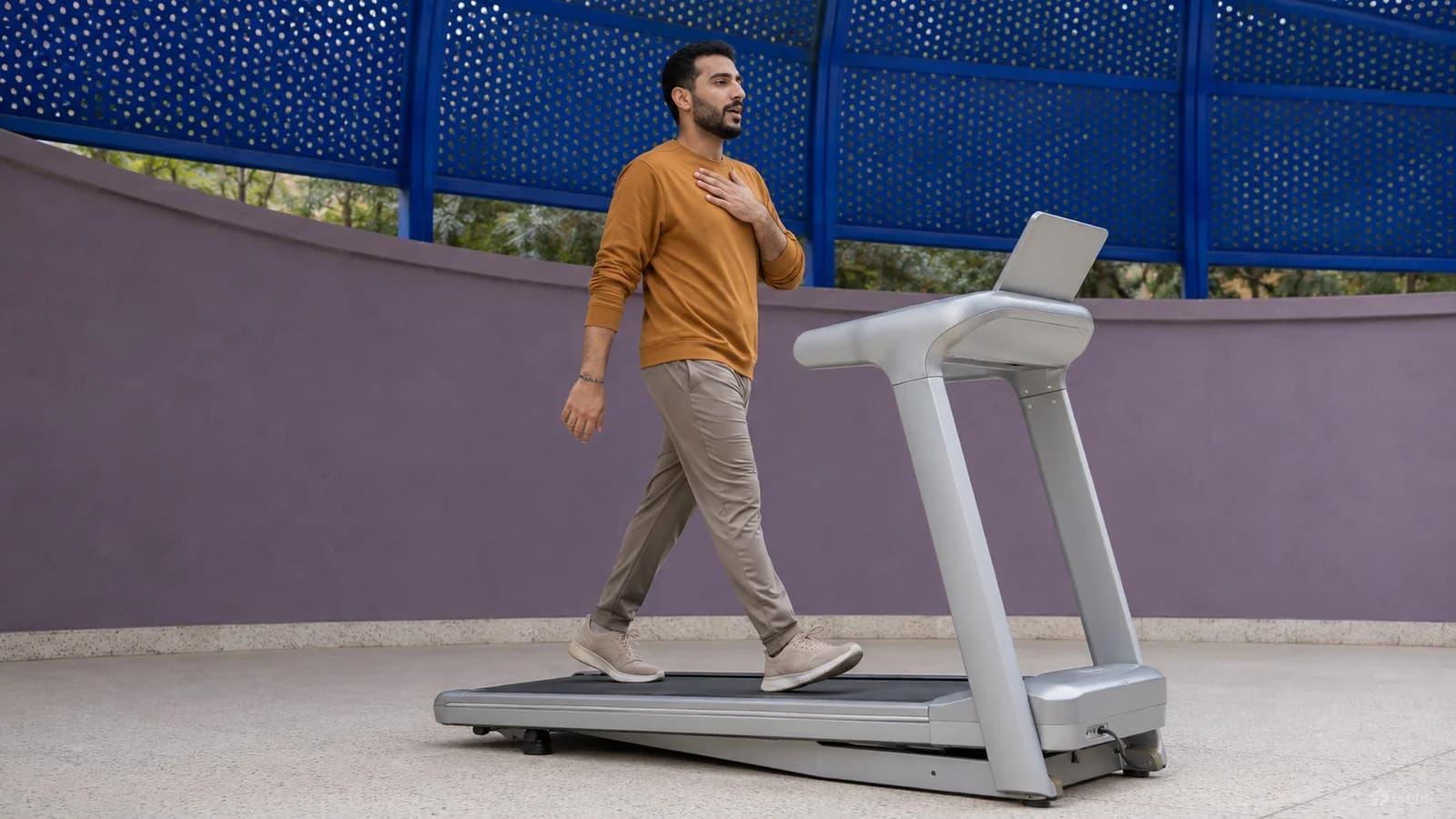
Your first incline treadmill session should not begin with somebody else's speed or a dramatic hill setting. It should begin with a pace you can repeat. Public-health guidance says inactive adults can start with small amounts and build toward 150 minutes of moderate aerobic activity plus two strength days each week. This four-week block is the start of that build, not a test you have to pass.
Quick answer: walk three times per week. Keep a five-minute easy warm-up and cool-down, begin with 10 minutes at your working setting, and use conversation to control the effort. Add time first. Test a little more incline only after the current session feels controlled during the walk and recoverable the next day.
Find your starting speed and incline
Before Session 1, set the treadmill to 0% incline and walk easily for five minutes. Then raise the speed until your stride feels natural and purposeful. Use the CDC talk test: moderate effort lets you talk but not sing, while vigorous effort limits you to only a few words before a breath. Stay on the conversational side for this beginner plan.
Use this starting checklist:
- Walk without leaning back or gripping the rails to hold the pace.
- Speak one full sentence; if only fragments come out, lower speed or incline.
- Add incline in one-percentage-point steps, waiting about two minutes after each change.
- Stop increasing at the first setting that feels purposeful but still conversational.
- Record speed, incline, and how the talk test felt.
That recorded combination is your baseline, not a universal prescription. One person may reach it on level ground; another may prefer a slower pace with a gentle hill. If the setting changes your gait or makes you depend on the rails, it is not yet a useful baseline. Finish with five easy minutes, consistent with the ACSM starting-walking guidance.
Follow the four-week beginner plan
Do three nonconsecutive sessions each week when possible. The durations below refer to the working walk; every session also has five easy minutes before and after it. ACSM suggests that inactive walkers may begin with 10-15 minutes and progress gradually, which is why the first increase extends time rather than forcing a steeper hill.
- Week 1: Complete 10 working minutes at your baseline speed and 0-1% incline. Repeat the same setup for all three sessions.
- Week 2: Complete 15 working minutes at the same settings. Do not add incline merely because the calendar changed.
- Week 3: Complete 20 working minutes. If two sessions remained conversational and your legs recovered normally, make two middle blocks two minutes long at one percentage point above baseline.
- Week 4: Complete 25 working minutes. Keep Week 3's settings, or extend each higher-incline block by one minute. Do not raise speed at the same time.
If you miss a workout, continue with the next planned session; do not combine sessions or jump ahead to catch up. If a week is not yet repeatable, repeat it. Consistency is the progression, while the numbers are simply its evidence.
Choose your phone
Put this advice into your next workout
Track the sets, loads, and progress behind what you just learned—without rebuilding the plan from memory.
iOS is available now. Android launch notifications are open.
Progress one variable, not everything
Use this decision rule after two sessions at the same setup. Keep the plan when the talk test is controlled but the session still feels new. Add five minutes when breathing, gait, and next-day recovery are all normal. Add one incline block only after the current duration is comfortable. Repeat or reduce when conversation breaks early, your gait changes, or fatigue affects the next workout.
This rule separates cardiovascular progression from treadmill drama. More speed and more incline both raise demand; changing both hides which adjustment caused the result. A useful log might say, “20 minutes, 4.5 km/h, 2% baseline, two blocks at 3%, full sentences, legs normal tomorrow.” That note makes the next decision much clearer than “hard walk.”
Fit walking around strength and recovery
If strength is your priority, place the demanding lift first and keep the walk easy enough that it does not erase the lifting signal. The guide to cardio after lifting explains when order matters. After an upper-body workout, your normal walk may fit well; after a demanding lower-body day, level walking or a separate day may be the better repeatable choice.
Weekly frequency matters too. Use the guide to choosing how many days to lift before stacking four or five lifting days beside three new walks. If soreness changes your gait or performance, keep the treadmill variables steady or step back. A planned week should protect both habits, not make each compete for recovery.
What incline research can and cannot tell you
A small laboratory study compared slower uphill walking with faster level walking in 12 adults with obesity. It is a useful example of how speed and grade can create different energetic and biomechanical demands, but it does not establish one ideal incline for everyone. The sample was small and specific, and the comparison should not be generalized into a medical-safety promise.
Translated into practice, incline is a tool for changing demand without automatically chasing more speed. Your setting still has to pass your own conversation, gait, and recovery checks. The study does not replace individualized clinical advice, and the ACSM resource's gradual-progression principle remains the more appropriate anchor for this beginner block.
Choose your next step after Week 4
After Week 4, choose one of three paths: repeat the week until it feels routine, add five minutes to the working walk, or add one short incline block while keeping time and speed fixed. Over later months, those small additions can help you build toward the broader weekly activity guideline without turning every session into a harder challenge.
Save each session in Rukn Fitness session log with duration, speed, incline, talk-test result, and one next-day recovery note. Your next workout then has a simple instruction: keep, add, or repeat. The best beginner plan is not the steepest one; it is the one whose next step you can explain and perform again.
Sources
The public-health guideline, CDC intensity guide, ACSM walking guide, and incline-walking study are linked where each one changes a decision above.
Choose your phone
Keep training with the app
Track every set, follow smarter progressions, and bring your workout plan with you when you leave the article.
iOS is available now. Android launch notifications are open.