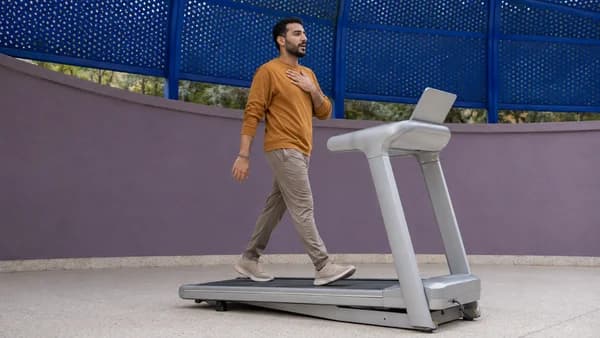
Restart Gym After a Break: A Two-Week Ramp That Protects Progress
Use a two-week ramp to restart gym training after a break, rebuild momentum, and avoid soreness-driven overcorrection.
Coming back after a training break feels simple until the first session asks the wrong question. The goal is not to prove that the old version of you is still there; it is to create a first week you can repeat, read, and improve. If the break was caused by travel, illness, work, exams, Ramadan schedule changes, or a stressful month, your old numbers are context, not orders.
Quick Answer: Restart With a Two-Week Ramp
Quick answer: restart gym training with two easier strength sessions in week 1, keep most sets 2-4 reps in reserve, and treat week 2 as the first honest comparison week. If the break was only a few missed sessions, the missed-workout progression reset can help you return faster. If it was two weeks or more, reduce the dose first so soreness and ego do not write the plan for you.
Use this decision rule: if warm-ups feel normal and soreness is mild after 24-48 hours, repeat the same exercises and add a small amount next session. If joints feel irritated, coordination is off, or soreness changes how you walk, sit, or brace, repeat or reduce the dose. That rule makes the restart measurable instead of emotional.
Week 1 Checklist: Make the First Sessions Repeatable
- Check the first warm-up set before you judge the whole week.
- Review the last clean workout, then start below it.
- Confirm each working set leaves at least 2 good reps available.
- Check soreness the next morning and again at 48 hours.
- Keep one recovery note so week 2 is not a guess.
For week 1, choose 2 full-body sessions or 2 short upper/lower sessions, not a heroic six-day comeback. The CDC guidance gives adults a health floor of 150 minutes of moderate activity plus 2 days of muscle-strengthening work each week, but your return does not need to hit every target immediately. A practical restart is two clean lifts, easy walking on off days, and enough notes in your Rukn Fitness training history to see whether the ramp is working.
Keep the exercise menu familiar. If you need a simpler session template, borrow the repeatability principle from the first week gym routine and apply it to your return: 4-6 exercises, 1-2 working sets each, and no new movement that creates surprise soreness. A returning lifter usually needs restraint more than novelty.
Scenario Map: Match the Ramp to the Break
Scenario map: if you missed less than 10 days, start near the last clean loads but leave more reps in reserve. If you missed 2-4 weeks, cut hard sets by about a third and keep loads comfortably submaximal. If you missed more than a month, restart like a skilled beginner for the first 2 sessions: familiar movements, conservative loads, and no failure sets. The longer the gap, the more you should protect the next workout from today's enthusiasm.
Choose your phone
Put this advice into your next workout
Track the sets, loads, and progress behind what you just learned—without rebuilding the plan from memory.
iOS is available now. Android launch notifications are open.
Week 2 is where you earn progress. If week 1 produced normal soreness and stable technique, add one small progression: a rep, a light load increase, or one extra set for a priority muscle. Do not add all three. If you are unsure how much work is enough, the minimum effective volume guide gives a useful lens: choose the smallest recoverable dose that moves the log, not the biggest session you can survive.
What the Research Means for Your Ramp
What the research means in practice: the 2026 ACSM position stand synthesized 137 systematic reviews and more than 30,000 participants, and its comeback lesson is consistency before complexity. Public-health guidance says 2 or more strength days are enough to cover the major muscle groups, while ACSM's progression model lists 2-3 days per week as a novice frequency and 8-12 repetition loads for many beginner strength goals. Those numbers do not mean you are weak; they mean a two-session restart is evidence-aligned, especially when you are rebuilding rhythm.
ACSM also describes load increases of about 2-10% when a lifter can perform 1-2 reps above the target. That is useful after a break because it stops you from jumping straight back to old pride weights. The practical version is simple: first regain clean reps, then add load. DOMS research describes soreness after unaccustomed exercise as a 1 to 5 day problem, so the real test of day one is whether it lets day two happen.
A meta-analysis on resistance-training cessation found that stopping training can reduce muscle size over longer detraining windows, but the practical comeback message stays calm: you are not starting from zero after a short break, and you also do not need to pretend nothing changed. Use the first two weeks to separate lost rhythm from lost capacity.
Mistake to Avoid: Paying Back the Break
Mistake to avoid: paying back the break with one punishing workout. You cannot compress missed weeks into one session without making the next sessions harder to read. A better comeback is boring on purpose: repeat the movements, stop sets before technique breaks, and let soreness, sleep, and performance decide the second week.
By the end of week 2, choose one of three outcomes. If performance is stable and soreness is normal, resume your old progression with smaller jumps. If strength is close but recovery is noisy, keep the same dose for one more week. If pain, illness symptoms, or sharp joint discomfort appear, stop chasing the old log and use easier movement or qualified clinical help where appropriate.
Sources
Choose your phone
Keep training with the app
Track every set, follow smarter progressions, and bring your workout plan with you when you leave the article.
iOS is available now. Android launch notifications are open.