How to Track Stationary Bike Progress: A Three-Ride Baseline
Build a three-ride baseline on the same stationary bike, compare only like-for-like sessions, and progress one variable at a time.
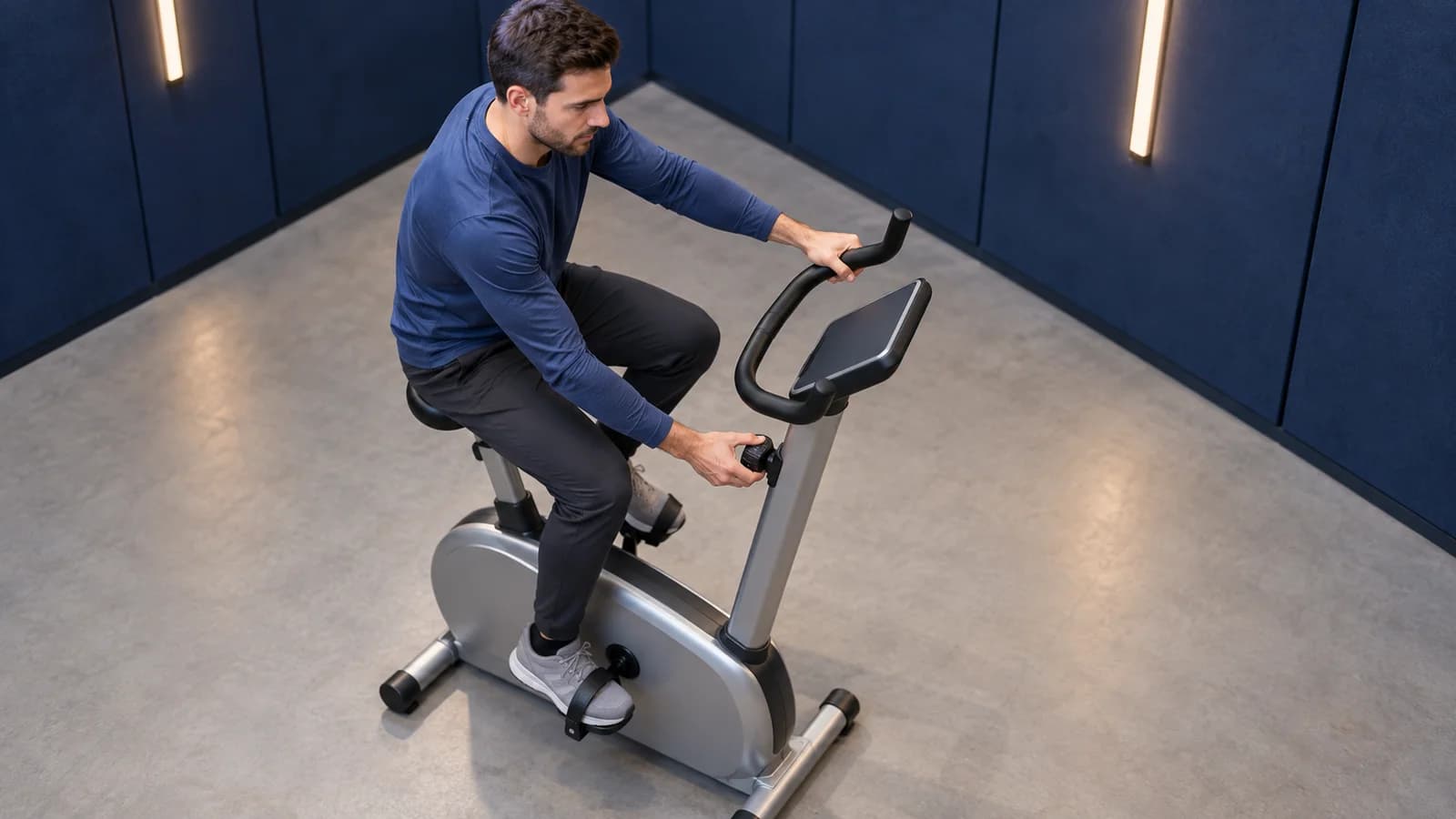
Your stationary bike only shows progress when you compare rides that mean the same thing. Start with three rides on the same bike, keep the duration and resistance setting steady, use the talk test to match effort, and record the bike's displayed distance only when it is available. After that baseline, change one variable—not all of them—on the next ride.
Use this checklist before Ride 1
- Choose one stationary bike and note enough setup detail to find it again: bike location or model, seat position, and resistance level.
- Pick a duration you can finish at a conversational effort. This is a baseline, not a test.
- Record four fields: duration, displayed distance if the bike supplies it, resistance level, and whether you could talk but not sing.
- Leave distance blank when the bike or tracker does not provide it. Do not invent a conversion.
- Repeat the same setup for three rides before calling one changed number a trend.
That last point matters because resistance levels and displayed distance are useful inside a repeatable setup, not universal units across every gym bike. Google Fit's own help page says its phone workflow does not track distance for stationary cycling. If your bike console shows distance, copy that display into your log; if it does not, duration, resistance, and effort are enough to build a useful baseline.
Build a three-ride comparison card
Use this compact comparison table as a hypothetical example. The rider chooses a comfortable 20-minute session at resistance level 6 and records the result immediately after each ride.
- Ride 1 — Bike A, seat 7, 20 minutes, level 6, 6.2 km displayed, talk test passed.
- Ride 2 — Bike A, seat 7, 20 minutes, level 6, 6.5 km displayed, talk test passed.
- Ride 3 — Bike B, seat 5, 20 minutes, level 6, 7.1 km displayed, talk test passed.
Ride 2 is comparable with Ride 1: the bike, setup, time, resistance, and effort cue match. Ride 3 is not evidence of a sudden jump, even though its displayed distance is higher. The bike and seat changed, and level 6 may not represent the same resistance. Keep the record, label the new machine, and start a separate baseline instead of deleting the result or pretending the numbers are interchangeable.
This is the specific gap a general workout-log checklist cannot solve for you automatically. The log preserves the evidence; your comparison rule decides which evidence belongs together.
Choose one variable for the next ride
Decision rule: after three comparable rides, choose the next change from the constraint you actually have.
- Add duration when the talk test stays controlled, the current ride feels repeatable, and more total aerobic time is the goal. Keep resistance fixed.
- Add one resistance step when time is limited and the same duration has become comfortably repeatable. Keep the bike and duration fixed, then check whether conversation still stays controlled.
- Use displayed distance as the outcome when bike, duration, and resistance all stay the same. A small increase can be useful local evidence; it is not a universal cycling distance record.
- Repeat the baseline when the bike, seat, workout format, or effort changed. A repeat is better data, not a failed workout.
Choose your phone
Put this advice into your next workout
Track the sets, loads, and progress behind what you just learned—without rebuilding the plan from memory.
iOS is available now. Android launch notifications are open.
Do not increase duration and resistance on the same ride if your purpose is to learn what caused the result. The next entry should answer one question. In the released Rukn Fitness cardio log, you can keep stationary-bike duration, distance, intensity, and resistance together, then review like-for-like sessions without claiming that the app calibrates different consoles or chooses the progression for you.
Put the numbers in health context
The U.S. Physical Activity Guidelines say adults can build toward 150 to 300 minutes of moderate aerobic activity per week, or 75 to 150 minutes of vigorous activity, alongside muscle-strengthening work on 2 days. Those are weekly public-health ranges, not a demand that your first three rides fill the whole target. Their useful message here is that repeated minutes accumulate; a short, comparable ride still belongs in the bigger week.
The CDC also defines moderate absolute intensity as 3.0 to 5.9 METs and vigorous intensity as 6.0 METs or more. Most beginners do not need to calculate METs on a gym bike. The practical translation is the talk test: at moderate effort you can talk but not sing, while vigorous effort allows only a few words before a breath. Use the same conversational cue across the baseline rides so a harder effort does not masquerade as improved efficiency.
If you want an actual starter workout rather than a measurement method, the four-week incline-walking plan shows how a separate cardio plan can progress time before machine difficulty. Keep that plan question separate from this article's question: first make stationary-bike rides comparable; then decide what to change.
Repair a mixed or incomplete bike history
Use this scenario map instead of rewriting old sessions to make the graph look tidy. Mark the first entry whose bike and setup you can identify, and compare forward from there. If you have an older ride with duration but no resistance, then it can still count toward your activity time, but it should not prove that you handled more resistance. If two rides used different bikes, group them as separate baselines. If distance is missing, compare duration and talk-test effort at the same resistance on the same bike.
Finish each entry with one short next instruction: repeat, add time, add one resistance step, or start a new-machine baseline. That sentence prevents the next ride from becoming another uncontrolled experiment.
What progress looks like after the baseline
Progress can be more distance at the same time, resistance, bike, and conversational effort. It can be the same displayed distance with easier breathing. It can be a longer ride at the same resistance and effort. Each is useful only because the other conditions stayed stable enough to interpret.
Your three-ride card is therefore not a scorecard against another rider. It is a small personal experiment. Keep the same bike when you can, record the setup you can repeat, preserve missing fields honestly, and progress one variable after the evidence becomes comparable. The best next ride is the one whose result you will understand.
Sources
Choose your phone
Keep training with the app
Track every set, follow smarter progressions, and bring your workout plan with you when you leave the article.
iOS is available now. Android launch notifications are open.