Minimum Effective Volume: How Many Hard Sets Build Muscle?
Find the smallest weekly hard-set budget that grows muscle without junk volume, recovery debt, or unreadable workout logs.
Quick Answer: Choose a Recoverable Set Budget
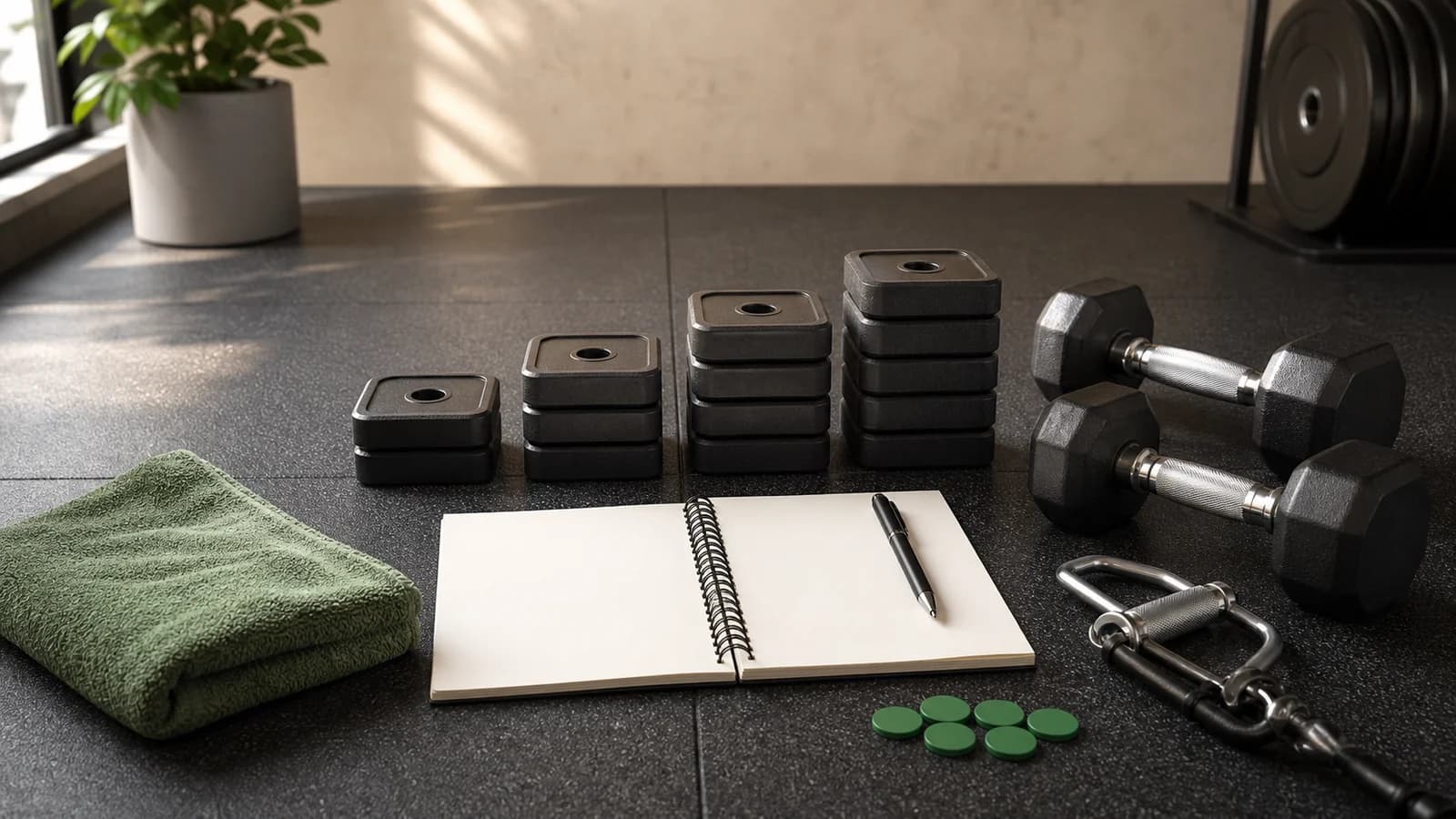
Minimum effective volume is not the lowest number that ever works. It is the lowest weekly hard-set budget that still lets a muscle grow while you recover, repeat the lifts, and read your log. For most beginner and early-intermediate lifters, make 6-10 hard working sets per muscle per week honest before adding more. The 2026 ACSM position stand synthesized 137 systematic reviews with more than 30,000 participants and notes that hypertrophy is enhanced by higher weekly volume, around 10 sets per muscle group per week. The practical answer is simple: earn 10 clean sets before chasing 15.
Use this quick answer like a dial. If a muscle gets fewer than 5 hard sets a week and has not grown or improved for several weeks, add a small amount. If it already gets near 10 hard sets and performance, soreness, or motivation is sliding, do not add junk volume; improve effort, exercise choice, sleep, or recovery first. When you are unsure how hard a set was, log RIR consistently and use the RPE vs RIR effort scale to keep "hard" from becoming a guess.
What Counts as an Effective Set
An effective set is a working set close enough to failure to create a useful growth signal, done with a movement you can repeat. Warm-ups, easy pump sets, and technique practice can help the session, but they should not all count toward your muscle-growth volume. That distinction matters because a notebook full of non-hard sets can make the week look productive while the muscle receives little tension.
Decision rule: count a set when it uses the target muscle, has stable technique, lands roughly within 0-4 reps in reserve, and would influence next week's load, reps, or recovery decision. Do not count ramp-up sets the same way unless they are genuinely challenging. If this is fuzzy, the warm-up sets vs working sets guide gives you a cleaner rule for separating preparation from real dose.
Use Volume as a Budget, Not a Dare
Research often gets flattened into "more sets equals more muscle." The better reading is that volume helps until the set budget becomes too expensive to recover from. Schoenfeld and colleagues compared weekly categories below 5, 5-9, and 10+ sets per muscle and found a graded dose-response trend. That does not mean every lifter should sprint to high volume; it means a stalled low-volume muscle has a clear lever to test.
Choose your phone
Put this advice into your next workout
Track the sets, loads, and progress behind what you just learned—without rebuilding the plan from memory.
iOS is available now. Android launch notifications are open.
A second meta-analysis by Krieger looked at 55 effect sizes from 19 treatment groups across 8 studies and found multiple sets produced larger hypertrophy effects than one set. So what? One hard set can be a start, a maintenance tool, or a comeback anchor, but multiple honest sets usually beat token volume. The useful question is not "what is the maximum I can survive?" It is "what is the smallest repeatable budget that still moves the measurement?"
Add Sets Only When the Log Asks for Them
Scenario map: if reps are rising, loads are stable, and soreness clears before the next repeat, keep the same set budget. If effort is high but the muscle has not improved for two or three exposures, add 1-2 hard sets for that muscle next week. If performance drops while soreness and joint irritation climb, remove 2-4 sets or use a deload-style week before adding anything.
This is where Rukn Fitness should make the decision less emotional. When your session notes show sets, reps, RIR, and recovery side by side, reviewing your weekly set history is more useful than copying someone else's volume chart. A small increase only counts as progress if the next week gives you clearer reps, cleaner technique, or a better recovery pattern.
Two-Week Test for Your Next Block
Pick one target muscle that is stuck and keep the rest of the plan steady. For two weeks, set a simple budget: six honest sets if you are new, eight if you are already consistent, or around 10 if you can recover and still progress. Spread those sets across at least two sessions so one workout does not become a fatigue dump.
At the end of the test, keep the budget if reps, load, or control improved without recovery debt. Add 1-2 sets only if the muscle feels underdosed and the log stayed clean. Cut volume if extra sets made your best lifts worse. If the increase creates gray-area work after your top set, use back-off sets without junk volume to decide whether the drop-off sets are helping or just extending the session.
Sources
Research translation: these sources support the practical rules above; they do not prove that one number fits every lifter.
Choose your phone
Keep training with the app
Track every set, follow smarter progressions, and bring your workout plan with you when you leave the article.
iOS is available now. Android launch notifications are open.