Machine to Free Weights Progression: Graduate One Lift at a Time
Use the machine until the pattern is repeatable, then test one lighter free-weight version while keeping the old machine baseline in your log.
Quick Answer: Graduate One Exercise, Not the Whole Plan
Machine to free weights progression should feel like a controlled test, not a personality change. Keep the machine when it helps you repeat the setup, feel the target muscle, and finish pain-free reps. Move only one lift when the machine version has been stable for 2 or 3 sessions. The first free-weight day is a comparison, not a permanent switch.
Quick rule: if the machine set is clean, the setup is easy to repeat, and the last sessions show similar reps and effort, test a lighter free-weight version. If the free-weight version changes the target muscle, forces awkward balance, or makes the next set messy, keep the machine for another week. The best beginner plan uses both tools deliberately.
Use Machines Until the Pattern Is Stable
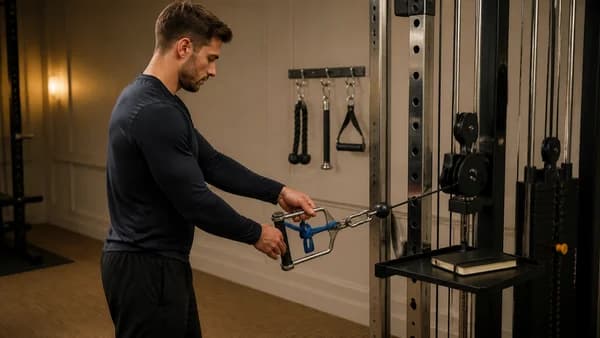
Machines are useful because they reduce the number of problems a beginner has to solve at once. That does not make them inferior. It makes them a clear baseline. Readiness checklist: before you graduate a lift, check that the seat, handle, range, tempo, and target muscle feel the same from session to session. If you still need help choosing basic session structure, pair this decision with a simple first week gym routine instead of changing every exercise at once.
Research translation: ACSM's 2026 resistance-training update synthesized evidence representing more than 30,000 participants and points beginners toward consistency before complexity. WHO guidance also keeps the public-health target simple: adults should include muscle-strengthening work for major muscle groups on 2 days or more per week. Those guidelines do not say every beginner must use free weights immediately. They support a repeatable plan you can actually keep.
Run a Free-Weight Test Before You Switch
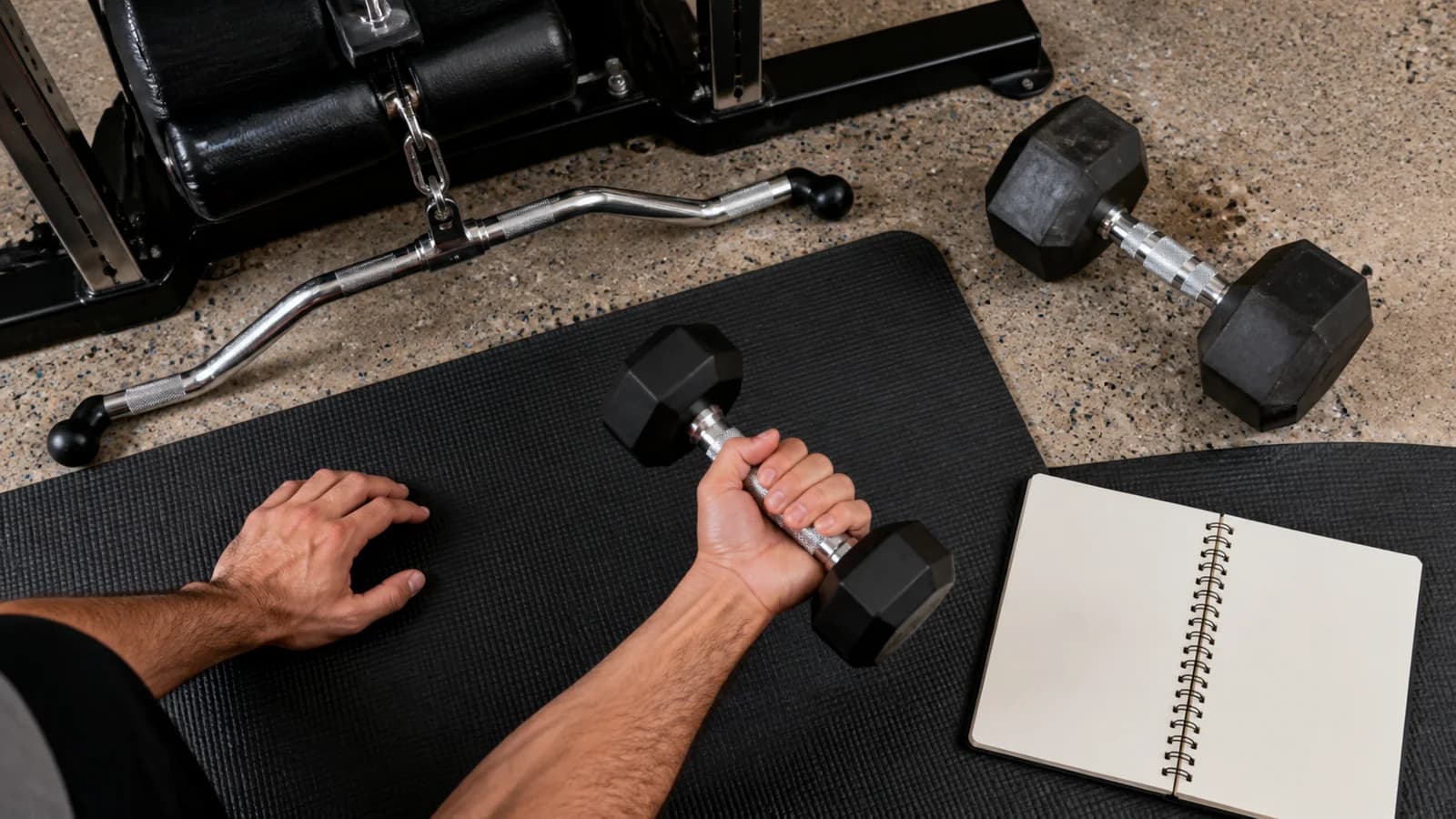
The first free-weight version should be easier than your machine set. Pick a load that lets you copy the same controlled range, stop with one or two solid reps left, and judge whether the target muscle still does the work. For a machine chest press, that might mean a lighter dumbbell press. For a machine row, it might mean a chest-supported dumbbell row instead of a loose standing pull.
Decision rule: treat the test like the exercise-choice question in same workout or change exercises: change one variable, observe it, and keep the rest of the plan boring. A useful test asks three questions. Can I set up without guessing? Can I keep the same muscle involved? Can I compare reps, load, and effort against the machine baseline without lying to myself?
Choose your phone
Put this advice into your next workout
Track the sets, loads, and progress behind what you just learned—without rebuilding the plan from memory.
iOS is available now. Android launch notifications are open.
Keep the Machine as Your Baseline
Do not delete the machine exercise the first day the dumbbell version feels good. Keep the machine baseline for two or three sessions, then compare. If the free-weight version gives similar reps, clean control, no joint irritation, and a clearer skill benefit, let it replace the machine. If it steals attention from the target muscle, delays progress, or creates new discomfort, the machine remains the smarter tool.
This is where tracking matters. In Rukn Fitness, log the machine baseline and the free-weight trial as related versions of the same movement, then review the history before deciding. That prevents a common beginner mistake: remembering the exciting new variation and forgetting that the old machine was still producing reliable progress.
Progression Mistakes to Avoid
Avoid changing the whole workout because one free-weight test went well. A split decision like full body versus push pull legs already changes recovery and exercise order; adding several tool swaps at the same time makes the signal noisy. Also avoid ego loading. If the free-weight version needs a lighter weight, that is not regression. It is the cost of learning control.
The final decision is simple: graduate one lift when the free-weight version is controlled, comparable, and useful. Stay on the machine when it is safer, clearer, or still progressing. Use both when each one solves a different job. Beginners do not need a machine-only identity or a free-weight-only identity; they need a plan that keeps progress readable.
Sources
- ACSM resistance training guidelines update summarized the 2026 position-stand update and emphasized practical consistency from a broad resistance-training evidence base.
- Haugen and colleagues' free weights versus machines review supports tool-specific testing: strength tends to improve most in the mode you practice, while broad outcomes are not automatically better with one tool.
- WHO physical activity guidance keeps the baseline simple by recommending muscle-strengthening work for major muscle groups on two or more days each week.
Choose your phone
Keep training with the app
Track every set, follow smarter progressions, and bring your workout plan with you when you leave the article.
iOS is available now. Android launch notifications are open.