Same Workout or Change Exercises? When Consistency Wins
Use this rule to decide when to repeat the same workout, when to swap one exercise, and when variety is hiding your progress signal.
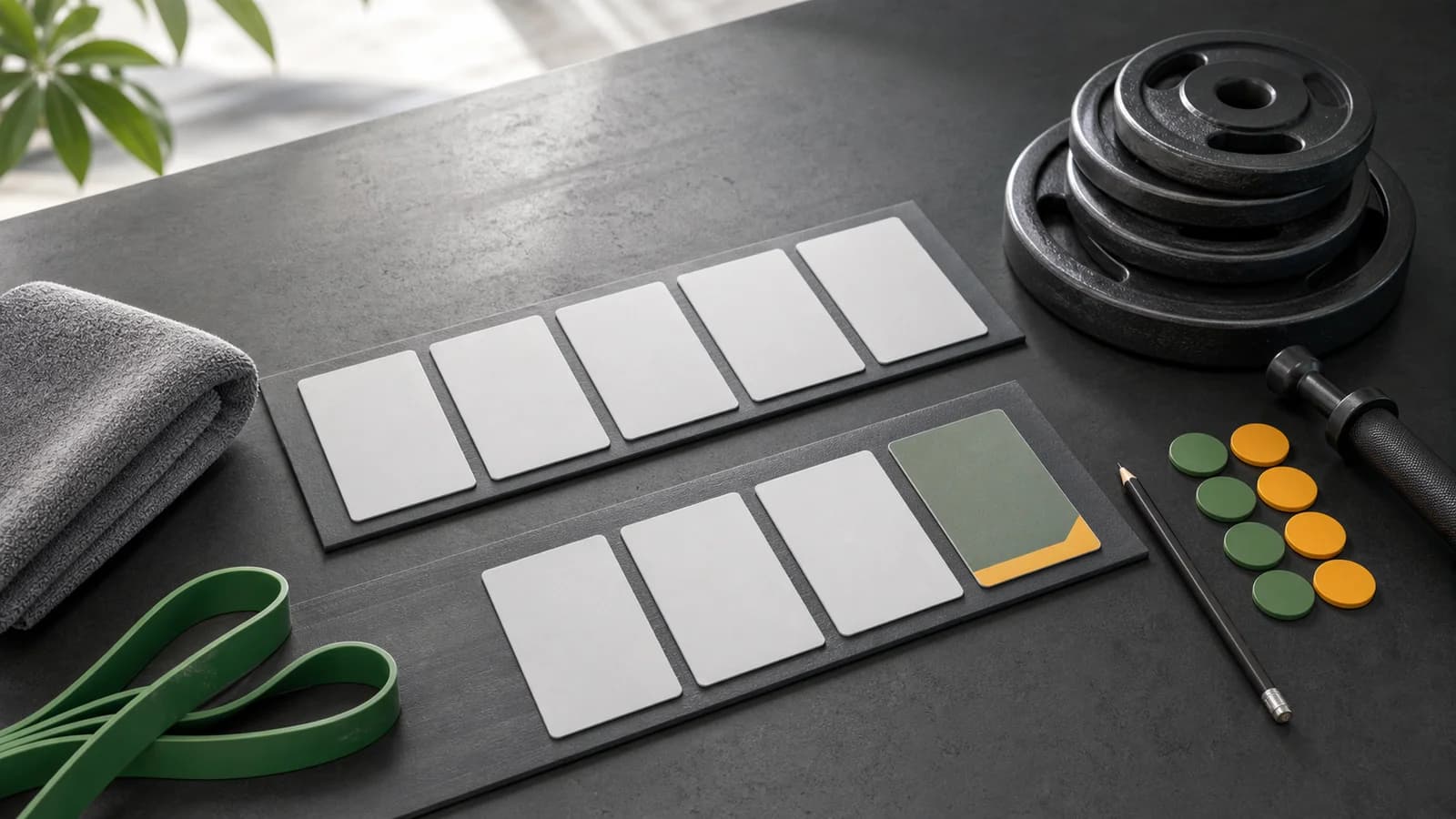
Changing exercises feels productive because it gives every week a fresh start. The problem is that fresh starts erase the comparison you need for progress. If the exercise, rep range, rest, and setup change every session, you may train hard but still not know whether you became stronger, cleaner, or just different.
Quick Answer
Keep the same core workout until you have at least 3 comparable sessions across several weeks, as long as the exercises feel safe, repeatable, and still produce progress. Change one exercise at a time when pain, equipment limits, poor target-muscle feel, or repeated stalls make the old choice less useful. The 2026 ACSM resistance-training update emphasizes consistency over complicated programming, and that matters here: a simple plan you can repeat usually beats a clever plan you keep rewriting.
For beginners, this means the first decision is not variety. It is a repeatable base. If you are still building that base, the local guide to a first week gym routine is a better next step than collecting new exercises. Variety earns its place after your log shows that the current movement is the problem.
Decision Rule
Use a stay-adjust-swap rule. Stay with the exercise if load, reps, range of motion, or control is improving across comparable sessions. Adjust the setup if the exercise is close but not quite right: a different bench angle, a machine seat setting, a grip width, or a lighter first set can solve the issue without deleting the data trail. Swap the exercise only when the repeated evidence says it is blocking training quality.
The best swap is usually close, not random. If a barbell row keeps turning into lower-back fatigue, a chest-supported row preserves the same training goal with less noise. If a free-weight press feels unstable, a machine press can be a better repeatable choice; the local machines versus free weights guide helps keep that decision practical instead of emotional.
Scenario Map
Imagine you ran the same upper-body day for three weeks. The incline press moved from 25 kg dumbbells for 8 reps to 10 reps with the same control. Keep it. The cable row stayed at the same load but felt smoother and used a fuller range. Keep it for another week. The upright row pinches your shoulder every time despite lower load and careful setup. Swap it for a lateral raise or machine shoulder movement.
Now imagine the gym is crowded and the planned exercise is taken. Do not use chaos as a reason to rewrite the whole plan. Use a same-pattern substitute for that day and write it down. The exercise-order guide for a busy gym is useful because it protects the training priority when the exact station is unavailable.
Choose your phone
Put this advice into your next workout
Track the sets, loads, and progress behind what you just learned—without rebuilding the plan from memory.
iOS is available now. Android launch notifications are open.
What Research Means
Exercise variation is not useless. A systematic review on varying resistance exercises found that variation can influence strength and hypertrophy, but the useful version is systematic rather than random. A PLOS One study in resistance-trained men found exercise variation improved motivation while producing similar muscular adaptations. That is a good argument for planned variety, not for changing the whole routine whenever progress feels slow.
The ACSM progression model also supports small, readable changes. When target reps are exceeded by one or two reps, load can often rise by about 2 to 10 percent. That advice only works when the exercise is stable enough to compare. If every week uses a new movement, you lose the evidence that tells you whether to add weight, add reps, repeat, or rest.
Check Your Log
Before changing exercises, compare at least 3 similar sessions. In workout history you can review later, note the exercise, setup, load, reps, range, and one short reason if you swapped. If the same lift improves for two weeks, keep it. If it hurts twice, swap it. If motivation is the only issue, change one accessory or rep range while keeping the main lifts steady.
If everything feels stale but the numbers are still improving, you do not have a programming emergency. If the numbers are flat, recovery is poor, and several exercises feel worse, use the workout plateau checklist before blaming the exercise menu. Sometimes the fix is sleep, rest time, volume, or effort, not a brand-new routine.
Mistakes To Avoid
The first mistake is changing exercises because soreness disappeared. Less soreness can mean you adapted, not that the movement stopped working. The second mistake is changing every lift at once; if progress improves, you will not know which change helped. The third mistake is copying variety from advanced lifters who already have years of technique and stable training history.
A better rule is boring but effective: keep the main lifts stable long enough to measure, rotate accessories only when they solve a real problem, and let your log decide. Consistency is not the opposite of progress. It is the measurement system that tells you which change is actually worth making.
Sources
Choose your phone
Keep training with the app
Track every set, follow smarter progressions, and bring your workout plan with you when you leave the article.
iOS is available now. Android launch notifications are open.