Creatine Before or After Workout? Build the Habit First
Use creatine before or after workouts if that helps you remember it, but make daily consistency, sensible dosing, and strength tracking the real decision.
Quick Answer: Take Creatine When You Will Repeat It
If you are choosing between creatine before or after a workout, choose the time you will remember. For most healthy lifters, the useful rule is simple: take a sensible dose every day, keep lifting variables stable, and judge the supplement by training results instead of the clock. Pre-workout can work if it sits beside your gym bag. Post-workout can work if it sits beside your meal. A non-training-day dose can work with breakfast. The strongest routine is the one that survives busy weeks.
That answer does not make timing meaningless; it just puts timing in its correct place. Creatine helps by gradually increasing muscle creatine stores, not by acting like a short-lived stimulant. So the reader decision is practical: pick a daily slot, keep it boring, and use your logged sets, reps, load, and effort to decide whether the whole training plan is moving. If your goal is muscle gain, pair the habit with honest loading choices from the rep range guide rather than expecting a scoop to fix poor sets.
The Timing Rule: Consistency Beats the Window
The direct timing evidence is not strong enough to make "before" or "after" the main rule. A 2022 trial in trained athletes compared 5 g of creatine taken within 1 hour before training with 5 g within 1 hour after training for 8 weeks, and timing did not clearly add an extra advantage. What the research means is practical: once stores are supported, daily intake and training quality matter more than a perfect window. That matches the bigger idea from the ISSN position stand.
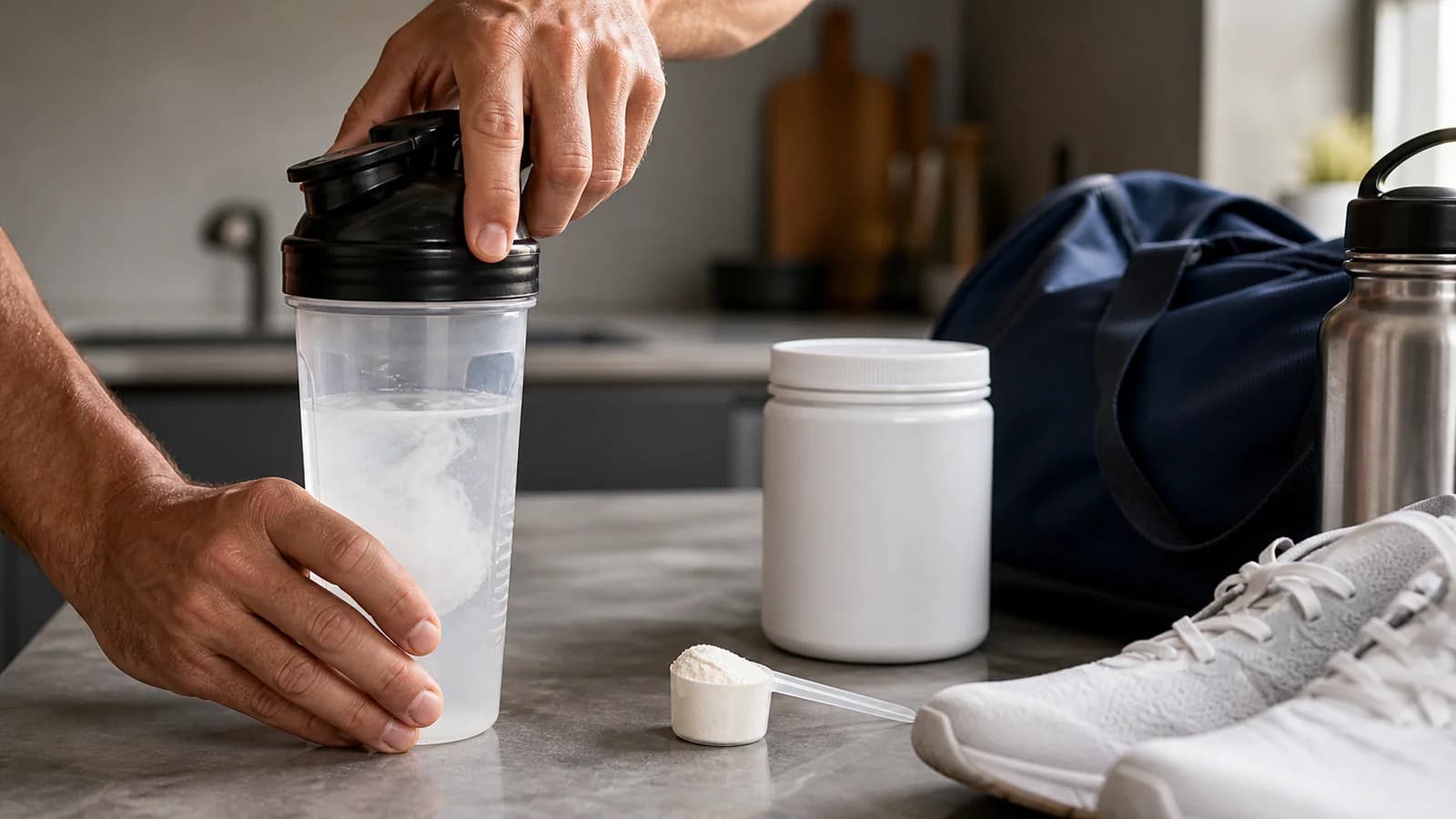
Use timing as a reminder system. If you lift after work, put the shaker in the same place as your shoes. If you train early and your stomach dislikes powder before hard sets, take it after breakfast or lunch. If you often miss weekends, attach the dose to brushing teeth, coffee, or another daily habit. The failure mode is not taking it at 4:07 p.m. instead of 5:12 p.m.; the failure mode is taking it four random times, then assuming creatine "does nothing."
Choose a Dose You Can Keep
The common maintenance dose is 3-5 g daily. The ISSN review also describes a loading option of about 0.3 g per kg per day for 5-7 days, followed by 3-5 g daily. Loading may fill stores faster, but it is optional for a normal gym routine. Decision rule: if loading causes stomach discomfort or makes the plan feel complicated, skip it and use the daily maintenance approach. It is slower, quieter, and easier to repeat.
Choose your phone
Put this advice into your next workout
Track the sets, loads, and progress behind what you just learned—without rebuilding the plan from memory.
iOS is available now. Android launch notifications are open.
Do not turn the scoop into the whole program. A 2025 meta-analysis reported a significant strength benefit in pooled general-population studies, while a 2024 meta-analysis found that creatine combined with resistance training can enhance strength in adults under 50. The phrase "combined with resistance training" is the important part. Your dose supports training; it does not replace enough weekly work, appropriate effort, or recoverable progressions.
Track Training, Not Just the Tub
For the first 4-8 weeks, track what would prove the habit is helping. Keep exercises, rep ranges, and rest roughly stable enough that the signal is readable. Look for small increases in reps at the same load, cleaner sets with the same weight, or a steadier ability to repeat hard work. If every workout changes, you will not know whether creatine, sleep, exercise selection, or effort caused the result.
This is where Rukn Fitness should do the boring work for you. Log your sets, reps, load, and notes in a set and strength trend log, then review strength trends instead of trying to remember how a session felt two weeks ago. If your notes are messy, the guide to workout log mistakes will help you record decisions, not just numbers. If you constantly turn every set into a max test, the training to failure guide explains how to keep effort comparable.
Safety Checks Before You Start
Creatine is one of the better-studied sports supplements, but it is still a supplement. Use this checklist before you start: if you have kidney disease, are pregnant, are under 18, use medication that affects fluid balance or kidney function, or have a clinician managing a medical condition, ask that clinician first. Athletes in tested sport should use third-party-tested products and follow team or federation rules. A little scale-weight increase can happen because creatine can increase water stored with muscle; do not mistake that for fat gain or failure.
The final decision is not "before or after" as if only one answer works. Choose one daily slot, use 3-5 g unless a deliberate loading phase makes sense, keep the rest of training consistent, and review your log after several weeks. If the habit is easy, the dose is sensible, and the training data improves, the timing choice has done its job.
Sources
Choose your phone
Keep training with the app
Track every set, follow smarter progressions, and bring your workout plan with you when you leave the article.
iOS is available now. Android launch notifications are open.