Gym Rest Timer: Time Recovery Without Drift
Use a workout rest timer to protect set quality, control session drift, and decide when short, medium, or long rest actually fits.
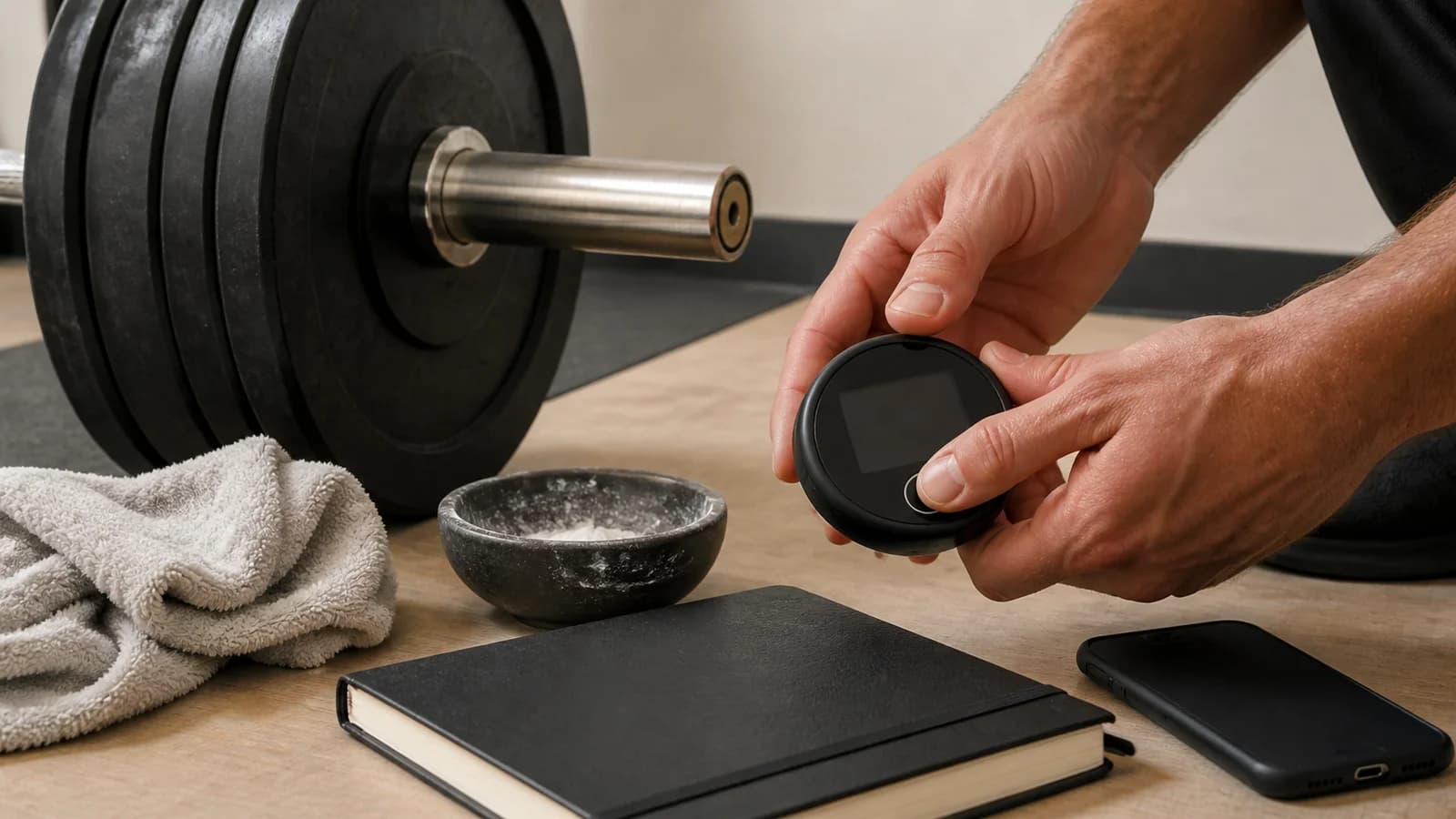
Most lifters use rest time in one of two weak ways: they rush because the gym feels busy, or they let the phone decide when the next set happens. A workout rest timer should solve both problems. It is not a moral test and it is not the same countdown for every exercise. It is a simple decision tool: rest long enough that the next set still proves something about strength, reps, and effort, then start before rest becomes drift.
Quick answer: use a long timer for heavy compound sets, a medium timer for most hypertrophy work, and a short timer for small low-cost sets; then adjust from the next set's quality instead of guessing.
Decision Rule: Time the Proof, Not the Clock
Set the timer before the set starts, then judge the next set by what changed. If load, reps, range of motion, and effort stay readable, the rest was probably long enough. If the first rep feels rushed, your brace is messy, or reps fall for a reason that is clearly recovery, add time next round. If you are fully ready but scrolling, chatting, or walking around without a purpose, shorten the timer. In Rukn Fitness, pair the rest note with load, reps, and effort so the next workout has context instead of a vague memory.
Set Three Timer Defaults
Use this checklist before the first work set: choose three defaults, then adjust. For heavy compound sets where performance matters, start around 3 to 5 minutes. For most hypertrophy work, start around 1 to 2 minutes. For small isolation lifts, warm-up sets, or easy technique practice, 45 to 90 seconds can be enough. These are not laws. A hard squat, deadlift, bench press, row, or overhead press usually earns the long timer because breathing, bracing, and coordination need time to recover. A lateral raise, curl, cable pressdown, or calf raise often keeps quality with less rest because the system cost is smaller.
Choose your phone
Put this advice into your next workout
Track the sets, loads, and progress behind what you just learned—without rebuilding the plan from memory.
iOS is available now. Android launch notifications are open.
What the Research Means
The practical research message is conservative: longer rest often helps performance on demanding sets, but more time is not always better once quality is restored. The 2009 ACSM progression stand listed 3 to 5 minutes for heavy strength work and 1 to 2 minutes for many hypertrophy prescriptions (ACSM 2009). A trial in 21 resistance-trained men over 8 weeks found better strength and hypertrophy outcomes with 3-minute rest than 1-minute rest in that setting (Schoenfeld 2016). A 2024 Bayesian review reported a small advantage for resting more than 60 seconds, with little clear difference beyond 90 seconds for many hypertrophy comparisons (Frontiers 2024). The broader 2026 ACSM evidence update summarized 137 systematic reviews and more than 30,000 participants, which is a reminder to treat rest as one training variable inside the whole plan, not the whole plan (ACSM 2026).
Stop Rest From Becoming Drift
The timer also protects the length of the workout. If the session has many exercises, write the rest defaults before you start: long for the first heavy lift, medium for the main accessories, short for simple finishers. When time is tight, do not randomly cut every rest period. Keep the long timer on the lift that decides the day, then save time with exercise order, setup discipline, or carefully paired accessories. If you use paired exercises, keep the goal clear and review the tradeoffs in supersets without losing strength before turning every rest period into another set.
Log Rest When Performance Changes
When rest starts changing performance, log rest notes with load, reps, and effort so the timer becomes part of the workout history, not another thing to remember.
You do not need to record every countdown forever. Log rest when it explains performance. Write notes such as "bench needed 3:30 to keep 8 reps," "row dropped after 75 seconds," or "curls fine at 60 seconds." That gives you a repeatable starting point next week. The mistake is logging only weight and reps while ignoring the condition that made them possible. If your history is hard to read, fix that first with the workout log mistakes guide. A useful rest timer makes training calmer because the question changes from "am I waiting too long?" to "did this rest preserve the set I needed?".
Sources
Choose your phone
Keep training with the app
Track every set, follow smarter progressions, and bring your workout plan with you when you leave the article.
iOS is available now. Android launch notifications are open.