First Heavy Rep Feels Wrong? Make the Next Set Smarter
Use a three-signal check when the first heavy rep feels wrong: setup, effort, and recovery decide whether to repeat, reduce, or stop.
Quick answer: pause before chasing the plan
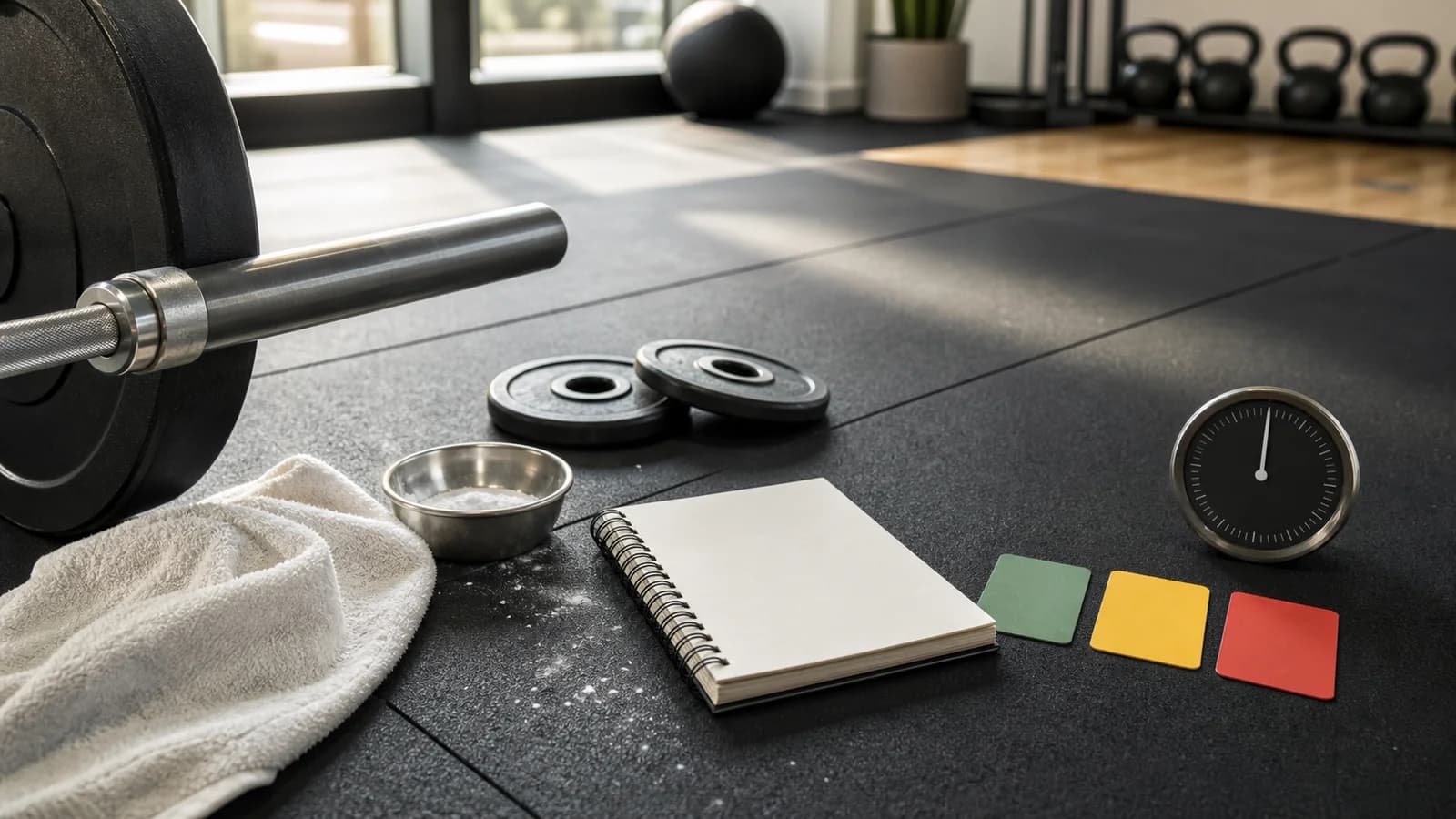
When the first heavy rep feels wrong, do not treat it as proof that the whole workout is ruined. Treat it as a check engine light. Pause for one minute and ask three questions: did my setup change, did the set feel much harder than planned, and is there a recovery or pain signal I should respect?
The simple rule is this: repeat the weight if the problem was setup, reduce 5 percent to 10 percent if the rep felt two effort points harder than expected, and stop or swap the lift if pain, dizziness, or a sharp technique breakdown appears. If the issue happened before the first work set, the existing warm-up set guide can help you decide whether you reached the heavy set ready or already tired.
Check the setup signal first
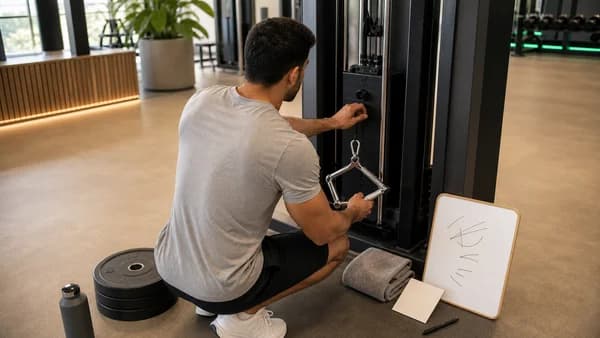
Most bad first reps are not mysterious. A foot moved, the grip changed, the brace came late, the rack height felt off, or you rushed the walkout because the gym was busy. That is a setup problem, not an automatic strength problem. Rest, rebuild the setup, and repeat the same load only if the first rep was safe and the mistake is obvious.
If the setup was different, write the cue before you add more weight. For example: "brace before unrack," "same stance as warm-ups," or "pause before first pull." That note is more useful than calling the day weak. It makes the next attempt comparable.
Symptom, cause, fix: choose the next set
Symptom: the first rep moved safely but felt like RPE 9 when you planned RPE 7. Cause: the planned load may be too high for today's readiness, or your warm-up left too much fatigue. Fix: drop 5 percent to 10 percent, keep the target reps, and judge the next set by clean speed and control. The RPE scale for strength training is useful here because 1-3 reps in reserve is a clearer target than "go heavy."
Symptom: the rep path drifted, depth changed, or the tempo became a grind on rep one. Cause: the exercise is no longer matching the version you meant to train. Fix: keep the same weight only if you can restore the version immediately; otherwise reduce load and protect the pattern.
Choose your phone
Put this advice into your next workout
Track the sets, loads, and progress behind what you just learned—without rebuilding the plan from memory.
iOS is available now. Android launch notifications are open.
Scenario map: adjust without ruining the workout
If this was a normal working day, make the smallest useful change. Repeat the set after a longer rest when the setup was the problem. Reduce the load when effort jumped. Swap to a safer variation when the joint or range of motion feels wrong. The goal is to preserve the training signal, not to win an argument with the program.
If this was a planned personal-record day, be stricter. One bad first heavy rep is enough to move from "test" to "practice." You can still do useful work with crisp back-off sets, but the day no longer needs a max attempt. Log the decision in Rukn Fitness with the reason attached to the set so the next heavy day starts from evidence, not memory.
What the research means
Research translation: the research does not say every lifter needs a perfect readiness device. It says your next choice should be measured. ACSM's resistance-training progression model recommends increasing load by about 2 percent to 10 percent only when performance exceeds the target for consecutive sessions. That supports patience: if the first heavy rep is messy, the useful move may be holding or reducing, not proving toughness.
Warm-ups matter too. A systematic review found warm-up improved performance in 79 percent of the criteria examined, but that does not mean more warm-up is always better. Your warm-up should make the first heavy rep clearer, not steal the energy needed for it. Velocity-loss research also treats rep speed changes as a fatigue signal, which is why a suddenly slow first rep deserves attention.
Example: the squat feels wrong today
Imagine the plan says squat 100 kg for 5 reps at about RPE 7. The first rep is safe but slow, and it feels closer to RPE 9. Do not jump straight to 105 kg. Rest, check stance and brace, then choose one of three paths: repeat 100 kg if the setup was clearly rushed, use 92.5-95 kg if effort was the problem, or switch to a controlled variation if the range of motion feels painful.
After the workout, keep the note short: planned load, first-rep feel, adjustment, and result. A clean workout log template makes this pattern obvious over two or three sessions. If the same lift keeps feeling wrong at the first heavy rep, compare it with your starting-weight method before rewriting the whole program.
Sources
Choose your phone
Keep training with the app
Track every set, follow smarter progressions, and bring your workout plan with you when you leave the article.
iOS is available now. Android launch notifications are open.