First Week Gym Routine: Do Enough Without Getting Too Sore
Use a repeatable first-week gym plan with two strength days, simple exercises, soreness rules, and notes that guide week two.
Most first-week gym routines fail because they try to prove fitness on day one. The better goal is simpler: finish two clean sessions, learn the equipment, and come back without soreness deciding the rest of the week for you. Week one should feel almost too manageable while you are doing it, then useful when you repeat it.
Quick answer: make week one repeatable
For a first week gym routine, plan 2 strength sessions, use 4 to 6 exercises per session, and stop most sets with about 2 reps in reserve. Start with 1 or 2 easy working sets of 8 to 12 reps for each movement. Add light walking or mobility on the days between if it helps you feel better, not because you are trying to punish the missed years of training in one week.
Decision rule: if the movement feels unfamiliar, choose the easiest version and count the session as practice. If form breaks before the target reps, lower the weight. If soreness is still changing how you walk, sit, or brace 48 hours later, repeat the same dose next time instead of adding more. The first win is not exhaustion; it is a session you can repeat.
Example week: two strength days and easy movement between
An evidence-backed target for adults is at least 150 minutes of moderate activity per week and muscle-strengthening work on 2 or more days, according to the WHO physical activity guidance. That does not mean your first gym week needs five hard days. It means two strength days are already aligned with a real health target, and the rest of the week can support recovery and confidence.
Try this shape: Monday full-body practice, Wednesday 20 to 30 minutes of easy walking or mobility, Friday full-body practice again, then a weekend walk if energy is good. In each strength session, choose a squat or leg press pattern, a hip hinge or hamstring machine, a push, a pull, and one core or carry exercise. Keep the load light enough that the last rep still looks like the first.
Use this first-week routine card instead of building from a blank page:
| Day | Exercises | Dose | Stop rule |
| --- | --- | --- | --- |
| Day 1 | Leg press or goblet squat, chest press, seated row, hamstring curl, plank or suitcase carry | 1 to 2 working sets each, 8 to 12 reps where reps apply | Stop with about 2 reps in reserve and leave while form still feels teachable |
| Day 2 | Leg press or split squat to a short range, lat pulldown, dumbbell Romanian deadlift, machine shoulder press, dead bug or cable hold | Repeat the same dose, or reduce one set if soreness changed movement | The second exposure should feel cleaner, not heroic |
That table is a starting script, not a contract. If your gym is crowded, keep the movement job and swap the tool: leg press can become goblet squat, chest press can become push-ups on a high surface, and seated row can become a cable row. This first-week equipment fallback keeps the plan usable when the gym is crowded because the main problem is not finding the perfect machine; it is finishing the week with a routine you can actually repeat.
Choose exercises that teach, not test
The ACSM 2026 resistance-training update summarized 137 systematic reviews and more than 30,000 participants, with a clear practical message: regular resistance training matters more than chasing a complicated perfect program. For week one, that means using exercises you can repeat safely. Machines, cables, dumbbells, and bodyweight work are all valid if they let you learn positions without panic.
Choose your phone
Put this advice into your next workout
Track the sets, loads, and progress behind what you just learned—without rebuilding the plan from memory.
iOS is available now. Android launch notifications are open.
If a machine lets you feel the target muscle and repeat the motion, use it. If a dumbbell version feels natural and you can control it, use that. The beginner choice is the tool that teaches the pattern today, and Rukn Fitness already has a deeper guide to choosing machines or free weights as a beginner when you need the next decision.
Use soreness as feedback, not a score
Delayed-onset muscle soreness is closely tied to unaccustomed exercise, especially unfamiliar eccentric loading, according to a review of DOMS treatment strategies. Older mechanism research describes DOMS as pain and stiffness that can occur 1 to 5 days after unfamiliar exercise. That timing matters because day-two soreness can make a first-week plan look broken even when the dose was just new. Mild soreness is normal; soreness that changes your movement is a signal to repeat or reduce the dose.
Do not chase soreness to prove the workout counted. If your legs are stiff but your form is normal, repeat the planned session and keep the loads conservative. If soreness makes basic movement awkward, swap the next session for walking and light mobility, then return to the same exercise list. For a more detailed decision tree, use the Rukn Fitness guide on whether to train or rest with muscle soreness.
First-week checklist before you add more
Before increasing exercises, weight, or days, check three things. First, did you complete both planned sessions without form falling apart. Second, can you name what each exercise was supposed to train. Third, did soreness stay manageable enough that you wanted to return. If one answer is no, your next step is repetition, not escalation.
Week-two decision card: if both sessions were clean and soreness stayed mild, add one set to only one or two exercises. If technique felt uncertain, repeat the exact week and improve setup. If soreness changed normal movement, reduce the most irritating exercise range or set count. This keeps progression attached to evidence rather than post-workout emotion.
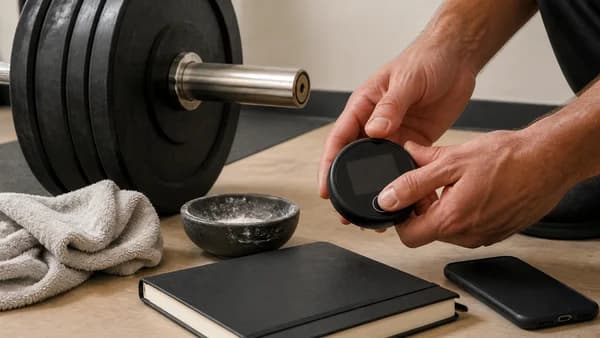
This is where logging changes the week. After each exercise, write the weight, reps, estimated reps in reserve, soreness note, and whether to repeat, reduce, or add next time. A note like "Day 1 leg press: easy but awkward, repeat" is more useful than "good workout." When those notes are visible, your first-week workout notes in Rukn Fitness become a plan for the second week instead of a memory test. You can also use the warm-up guide for a short readiness ladder before lifting once the routine feels familiar.
Mistake to avoid: turning day one into a tryout
The most expensive first-week mistake is testing everything at once: max weight, extra classes, long cardio, new machines, and every exercise a friend remembers. That feels ambitious in the moment, but it creates noisy feedback. You cannot tell whether soreness came from too many exercises, too much load, unfamiliar technique, or poor sleep.
Keep week one narrow. Pick the simplest version, leave reps in reserve, and repeat the same two sessions before you judge the plan. If the second exposure feels cleaner and soreness is less disruptive, you have earned a small increase next week. If not, you have useful information without losing momentum.
Sources
Choose your phone
Keep training with the app
Track every set, follow smarter progressions, and bring your workout plan with you when you leave the article.
iOS is available now. Android launch notifications are open.