Grip Giving Out Before Your Back? Use Straps Without Hiding the Problem
Learn when lifting straps help a back or hinge exercise, when to train grip directly, and how to log the limiter clearly.
Quick answer: use straps when grip is the limiter
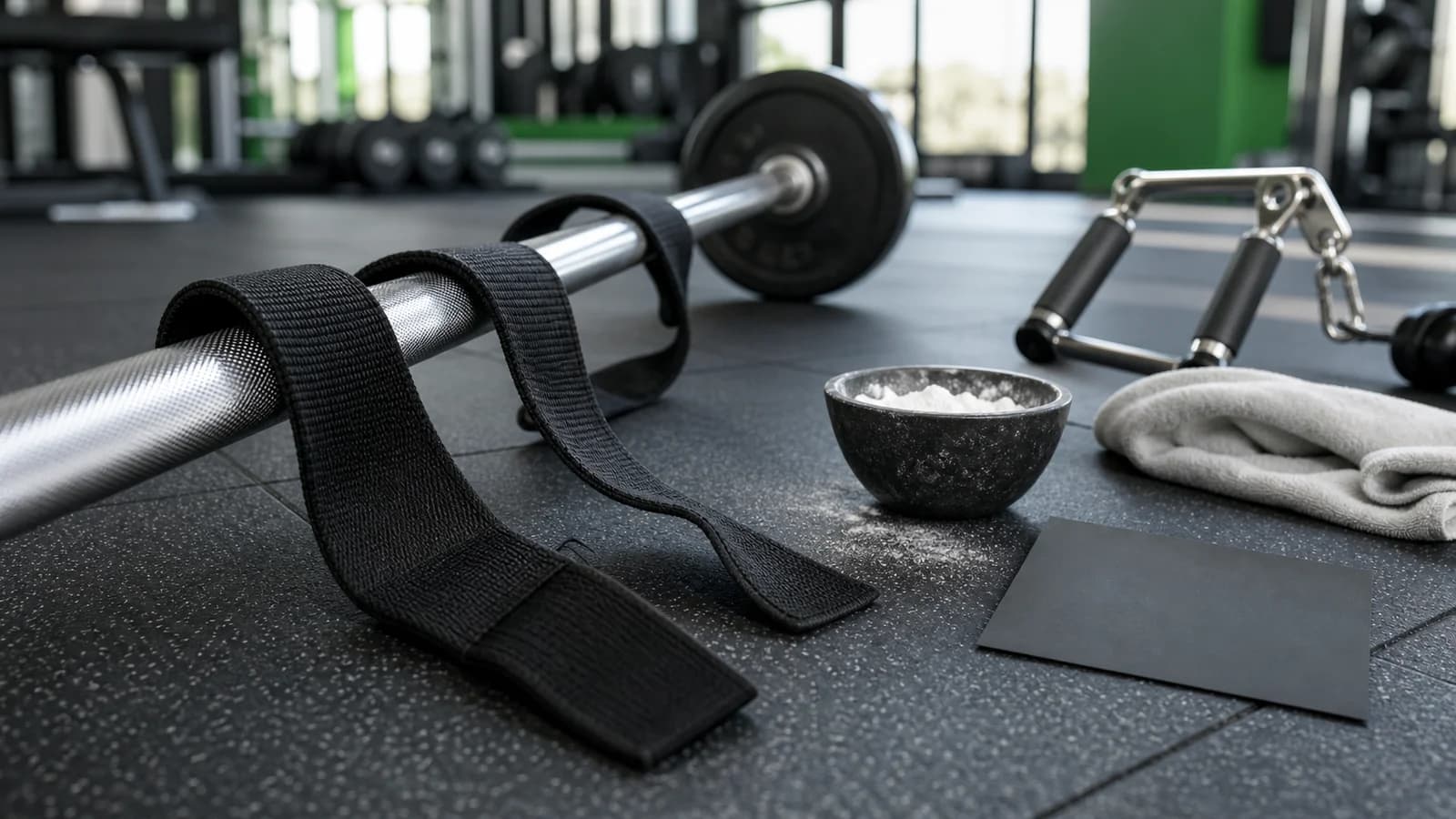
Use lifting straps when your back, glutes, hamstrings, or traps still have useful reps left but your hands are the only thing ending the set. Keep warm-ups and easier work strapless, then add straps on heavy or higher-rep pulling work when slipping would change the exercise. Train grip separately when strapless strength is the goal or when grip fails even on moderate loads.
- If grip slips after the target muscle is already close to done, stop and log the set as grip-limited.
- If grip slips early while the target muscle feels fresh, straps can make the exercise more honest.
- If grip fails on nearly every pull, fix the setup and add direct grip practice.
The 20-second diagnosis after the set
Right after the set, ask three questions: did the bar roll before the target muscle burned, did your torso or shoulder position change only because you were losing the handle, and could you have done more clean reps if your hands stayed locked? If yes, the limiter was grip, not the muscle you meant to train. That is where an effort note that separates muscle effort from hand effort is more useful than simply writing "failed."
A grip-limited note changes the next decision. If the back was fresh, repeating the same strapless load may just retest your hands. If the back finally worked and grip failed only at the end, the set may already have done its job.
When lifting straps help
Straps help most on pulling exercises where the target is not your hands: Romanian deadlifts, rack pulls, high-rep rows, pulldowns, heavy shrugs, and some machine rows with awkward handles. In those sets, a strap keeps the handle connected long enough for the planned muscle to receive the work.
Decision rule: use straps when they make the exercise more honest, not when they make the log look bigger. If a row turns into a forearm panic drill after six reps, straps can let the lats finish the planned set. If a deadlift top set is meant to be strapless, do not compare a strapped personal record as the same lift.
When to train grip instead
Train grip directly when grip strength is part of the goal. Powerlifting-style deadlift tests, carries, climbing, grappling, manual work, and sport preparation all need strapless exposure. You can still use straps on selected back work, but keep one or two honest strapless exposures each week: double-overhand warm-ups, farmer carries, dead hangs, or timed holds after the main work.
Grip training also matters when straps would hide a pattern you need to fix. If every warm-up slips, the answer is not more gear; it may be chalk, hand placement, bar choice, load selection, or a few weeks of direct grip practice. Treat hard strapless sets like a limited resource, the same way you would manage a failure-set budget instead of chasing failure by habit.
Choose your phone
Put this advice into your next workout
Track the sets, loads, and progress behind what you just learned—without rebuilding the plan from memory.
iOS is available now. Android launch notifications are open.
What the research means
The 2026 ACSM resistance-training position stand summarized 137 systematic reviews and more than 30,000 participants, with a useful reminder: consistency and progressive resistance training matter more than perfect-looking complexity. For a recreational lifter, straps are not a moral question. They are one way to keep the planned muscle work consistent when grip is the accidental bottleneck.
Specific strap studies are smaller, so use them as practical signals rather than universal law. A 2023 deadlift study in 10 trained women found that lifting straps allowed more repetitions while preserving grip strength without reducing bar velocity. A 2015 study with 11 trained lifters used three sets to failure at 90% of 1RM and found that straps changed deadlift set mechanics enough that strapped and strapless work should be read as different variants.
There is also no need to force every pulling set to true failure. A systematic review and meta-analysis found no significant strength or hypertrophy advantage for training to failure compared with non-failure training when the work was otherwise comparable. That matters because a grip-limited failure may create fatigue without giving the target muscle a better reason to grow.
Log the limiter before adding weight
In your log, separate the exercise from the limiter: "RDL 80 kg x 10, straps, hamstrings 1 RIR" is not the same signal as "RDL 80 kg x 8, no straps, grip opened." If you use Rukn Fitness to keep the set note beside the exercise history, the next session becomes easier to read: add load when the target muscle handled the work, repeat when the grip note is noisy, and train grip when the same limiter keeps appearing.
You can also split histories when needed. Keep "barbell row" and "barbell row with straps" as different comparisons for a short block, or write the strap status in the notes every time. This is the same logic as choosing machines or free weights by the job of the exercise: use the tool that lets the target work happen, then measure it honestly.
Sources
Choose your phone
Keep training with the app
Track every set, follow smarter progressions, and bring your workout plan with you when you leave the article.
iOS is available now. Android launch notifications are open.