Missed a Workout? What To Do Next Without Overtraining
Missed a workout? Use a calm skip, move, shorten, or recovery rule so one lost session does not become a week of rushed make-up training.
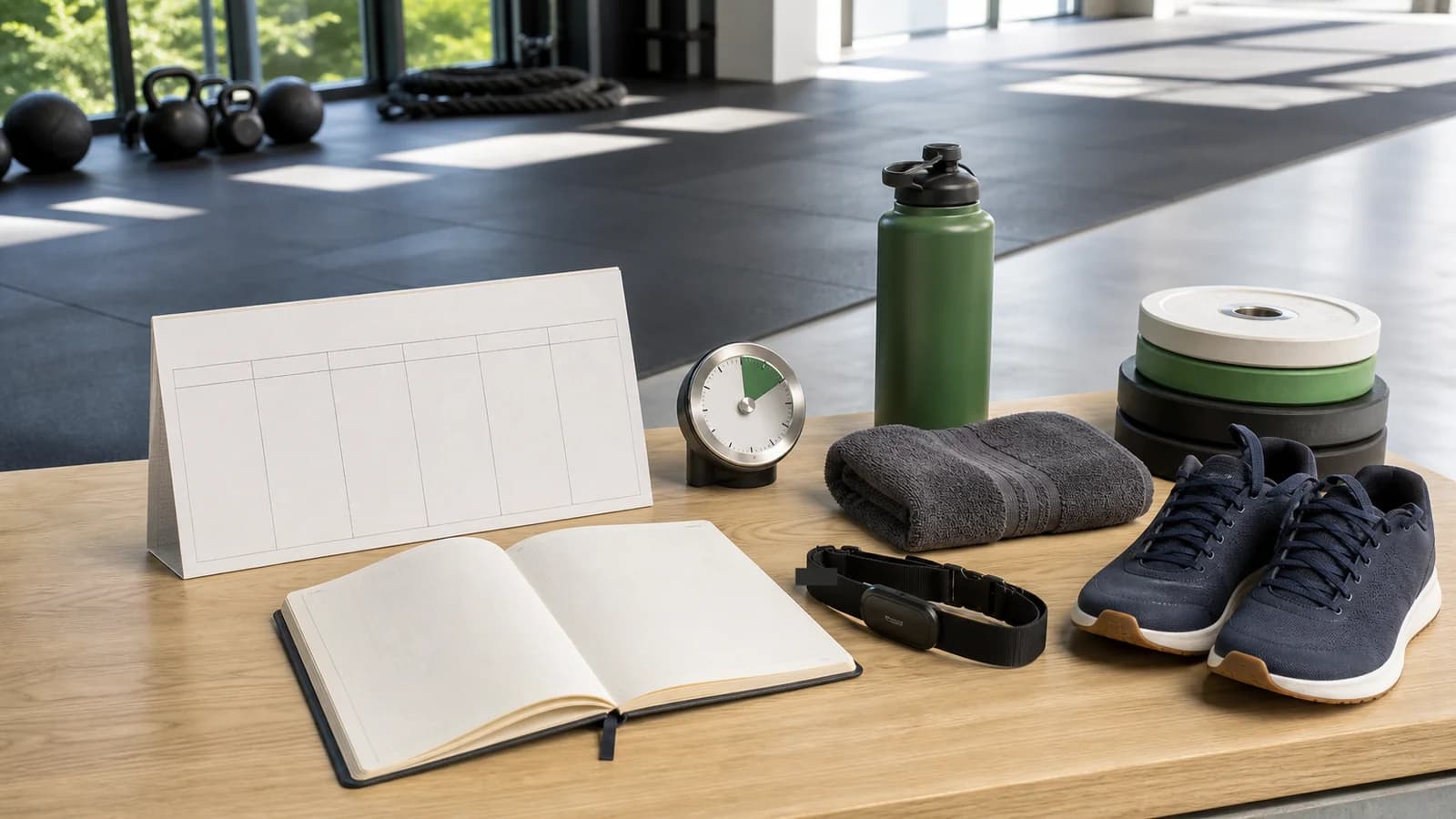
Missing one workout feels bigger than it is because the calendar shows a gap. The useful question is not, "How do I pay this back?" It is, "What decision protects the next seven days?" A missed workout can become a small adjustment, or it can become a rushed make-up session that steals recovery from the next workout. Choose the smaller problem.
Quick Answer: Use a Four-Step Reset
- If the workout was optional or low priority, skip it and protect the next planned session.
- If it was important and your recovery is normal, move it within the next 48 hours.
- If the week is crowded, shorten it to the main lift or main circuit plus one support move.
- If you missed because of illness, poor sleep, unusual soreness, or stress, replace it with easy movement or rest.
That rule works because consistency is not perfect attendance. It is the ability to make the next sensible choice. If the missed session was part of a longer break, treat the next few workouts like a restart and use the lighter structure in the first-week-back guide instead of forcing your old week into a smaller window.
Scenario Map: Skip, Move, Shorten, or Replace
Skip the workout when the session was extra volume, a second accessory day, or a workout you added only because motivation was high. Nothing needs to be repaired. Put your energy into the next scheduled session and keep the week clean.
Move the workout when it was one of your two or three key strength days and you still have a clear open slot. Keep at least a day between hard sessions for the same muscles if fatigue is obvious. Moving the session is different from stacking it on top of tomorrow.
Shorten the workout when you care about the training signal but the week is tight. Do the main lift, two to four hard-but-clean work sets, and one accessory that supports the goal. This keeps the habit alive without pretending a 70-minute session can fit into 25 minutes.
Replace the workout with recovery when the reason you missed it is also a recovery warning. If soreness, poor sleep, or life stress is still high, an easy walk, mobility work, or a light technique session is often the better bridge. The active recovery day guide is useful when you want to move but not create another hard day.
Decision Rule: Do Not Pay Back Missed Sets as Debt
The worst response is to add every missed set to the next workout. That usually changes the workout's job. A normal lower-body day becomes a marathon, a push day becomes sloppy, and the following session loses quality. Pay attention to the training effect you need, not the boxes you wish were checked.
Use this decision rule: if the make-up plan makes the next workout worse, it is not a make-up plan. It is a new problem. Keep the important lift, trim the nice-to-have work, and write one note about why the session changed. When you keep that note in Rukn Fitness workout history, the missed day becomes context for the next week instead of a vague guilt signal.
Choose your phone
Put this advice into your next workout
Track the sets, loads, and progress behind what you just learned—without rebuilding the plan from memory.
iOS is available now. Android launch notifications are open.
What The Research Means
Public guidelines give you a weekly frame, not a punishment calendar. The CDC points adults toward at least 150 minutes of moderate aerobic activity and muscle-strengthening work on 2 days per week. The practical takeaway is simple: one missed session matters less than the weekly pattern you build around it.
Strength progression also works best when performance is readable. The ACSM progression model discusses small load increases, commonly 2 to 10 percent, when the target work is being completed. After a missed workout, that means you should earn the next increase with good reps and recovery, not force it because the calendar owes you.
Habit research is also calmer than most people feel after a miss. In Lally's habit formation study, automaticity took 18 to 254 days, with a median of 66 days, and missing one opportunity did not erase the process. The decision is not whether you are disciplined enough to be perfect. It is whether you return to the cue quickly enough that the habit still has a place to land.
Finally, soreness has timing. ACSM's delayed-onset muscle soreness brief describes soreness after unfamiliar or demanding work as commonly appearing in the 24-72 hour window. If your make-up plan piles hard sets into that window, recovery may be the limiter, not motivation.
Worked Example: A Crowded Week
Imagine you planned lower body on Monday, upper body on Wednesday, and full body on Friday. Monday disappears because work runs late. If Tuesday is open and your legs feel normal, move lower body to Tuesday and keep Wednesday lighter for upper body. If Tuesday is packed, do a 25-minute lower-body minimum on Wednesday and turn Friday into the normal full-body day. If sleep is poor and soreness is high, keep Wednesday upper body and add an easy walk instead of chasing the missed day.
The point of logging is not to shame the gap. It is to make the next adjustment easier. A simple note such as "missed Monday, moved main squat work to Wednesday, dropped accessories" gives you better data than a blank week. The workout log template shows what to track so the next decision is based on sets, effort, and recovery rather than memory.
Mistakes To Avoid After One Missed Workout
Do not double the next session just to feel caught up. Do not turn every missed workout into high-intensity cardio. Do not punish yourself by removing rest days. And do not restart the whole plan unless the miss has become a repeated pattern.
If missed workouts keep happening, solve the pattern instead of the single day. Maybe the session is too long, the time slot is unrealistic, or the plan has too many optional exercises. A better schedule is not the one that looks hardest. It is the one you can repeat when life is normal and still repair when life is not.
Sources
Choose your phone
Keep training with the app
Track every set, follow smarter progressions, and bring your workout plan with you when you leave the article.
iOS is available now. Android launch notifications are open.