Slow Reps vs Controlled Reps: What Actually Matters
Learn when slow reps help, when they just reduce useful load, and how controlled tempo makes gym sets easier to judge and progress.
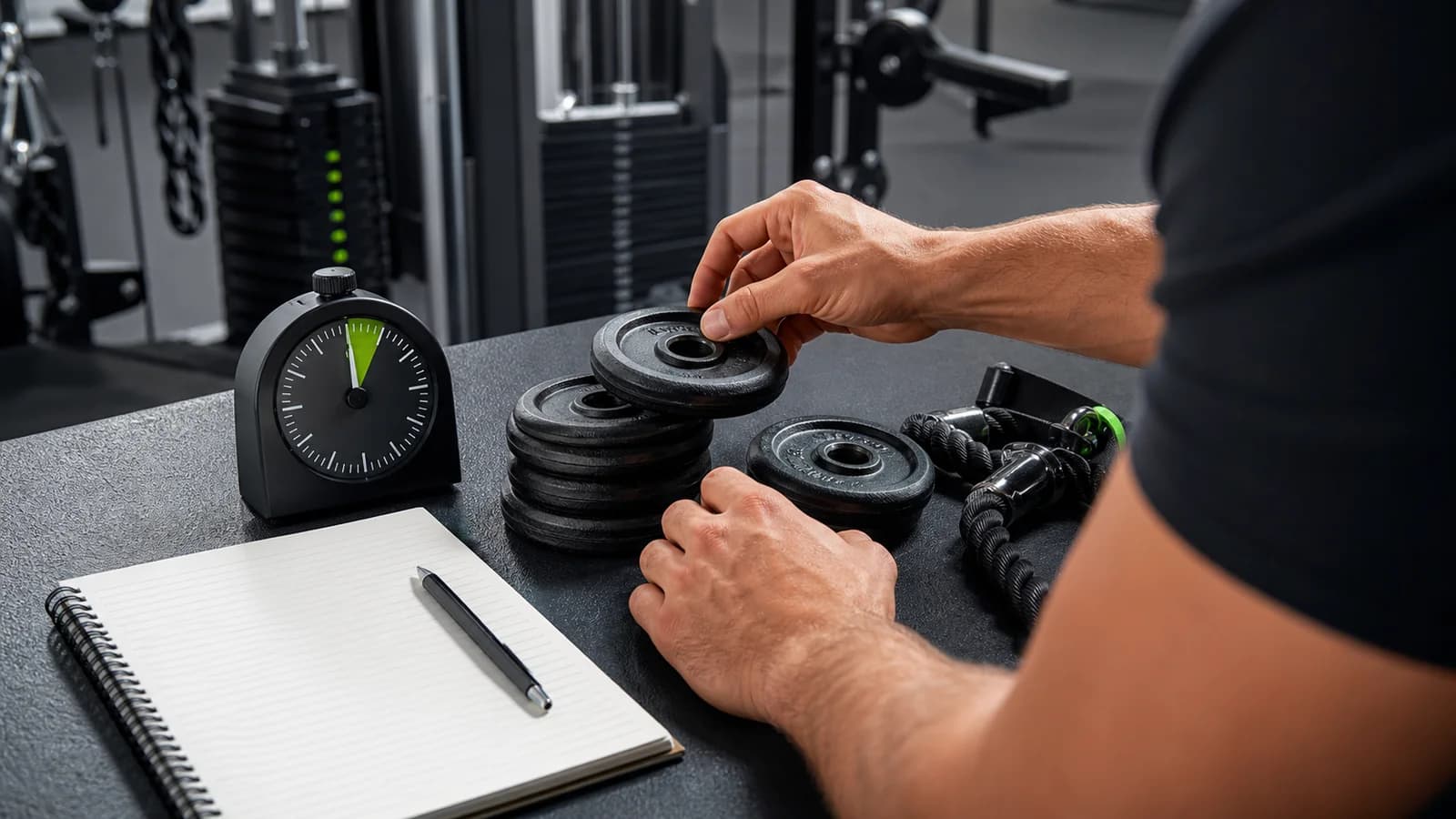
Slow reps are useful when they make a rep cleaner, not when they turn every set into a slow-motion punishment. The better target for most gym work is controlled reps: a deliberate lowering phase, no bouncing through the hard range, and a lift that still shows the load you can actually train. That distinction matters because tempo changes the weight you use, the reps you can repeat, and the signal you record for next week.
Quick answer: controlled beats slow for most sets
For hypertrophy and general strength work, do not chase the slowest possible rep. Reviews of repetition duration show that a broad range, roughly 0.5 to 8 seconds per rep, can build muscle when sets are hard and technique is consistent; very slow work around 10 seconds or more often forces the load so low that the set becomes a different tool. For a normal 8-12 reps set, a practical default is two to three controlled seconds down, a brief pause only if it improves position, then an upward phase with intent. Pair that with an honest reps-in-reserve target so “slow” does not hide that the set was simply too easy.
Use tempo to protect the rep, not punish it
Use tempo as a decision rule. If the target muscle stays loaded, joints feel stable, and the last rep looks like the first rep, the tempo is doing its job. If slowing down makes you cut range, lose balance, or turn 10 reps into 5 shaky reps, the tempo is taking over the workout. Controlled lifting should make the exercise easier to judge, not harder to repeat. This is why a new movement often needs a moderate starting weight before strict tempo; if the load is still a guess, use a calmer first session from the starting-weight guide and then refine tempo after the pattern is stable.
Slow the part that keeps you honest
Slow the part of the rep that solves a problem. On a cable fly, a slower opening phase can stop the shoulders from drifting. On a squat, a controlled descent can keep depth and balance honest. On a row, a pause near the body can expose whether you are using momentum. But the article's point is not to make every lift slow; it is to assign tempo where it protects today's main training signal. If your first exercise is the skill you most need to measure, the exercise-order decision should stay aligned with the tempo cue, so fatigue from slow accessory sets does not ruin the lift you care about.
Choose your phone
Put this advice into your next workout
Track the sets, loads, and progress behind what you just learned—without rebuilding the plan from memory.
iOS is available now. Android launch notifications are open.
Keep speed intent when strength is the goal
When strength, power, or performance tracking is the goal, keep the lowering phase controlled and try to lift with clean speed. ACSM's progression model treats repetition velocity as a variable, not a moral rule: beginners usually learn with slow-to-moderate control, while more advanced goals may need faster intent under safe technique. The useful question is, “Did this tempo help me produce the rep I meant to train?” If a 4-second lowering phase makes a heavy compound lift safer and more consistent, keep it. If a 7-second rep makes the load too light to reflect the session goal, shorten the tempo and protect the quality instead.
Log tempo only when it changes the decision
Log tempo only when it changes what you will do next. Notes such as “3 sec down,” “pause at bottom,” or “controlled but no grind” are enough; you do not need a laboratory code for every set. After 2-3 sessions, compare load, reps, RIR, and whether the same tempo still holds. If the same weight moves with cleaner control and the same reserve, progress is real. If tempo loosens whenever load rises, hold the weight and earn the rep first. Keeping those notes beside your sessions in one workout history makes tempo a practical signal instead of another thing to remember.
Mistakes to avoid
- Do not slow every set because “time under tension” sounds scientific; the source data supports useful control, not endless grinding.
- Do not use slow reps to avoid choosing a challenging load; a light set can still look neat and undertrain the goal.
- Do not count bounce-free half reps as better reps; range and target tension still matter.
- Do not add a long pause to every exercise; pause only where it teaches position or removes cheating.
- Do not compare two weeks of training unless tempo, range, and effort were similar enough to make the comparison fair.
Sources
Choose your phone
Keep training with the app
Track every set, follow smarter progressions, and bring your workout plan with you when you leave the article.
iOS is available now. Android launch notifications are open.