Full Body vs Push Pull Legs: Which Split Should Beginners Use?
Choose the beginner split your week can repeat, then use recovery, missed days, and workout logs to know when to change.
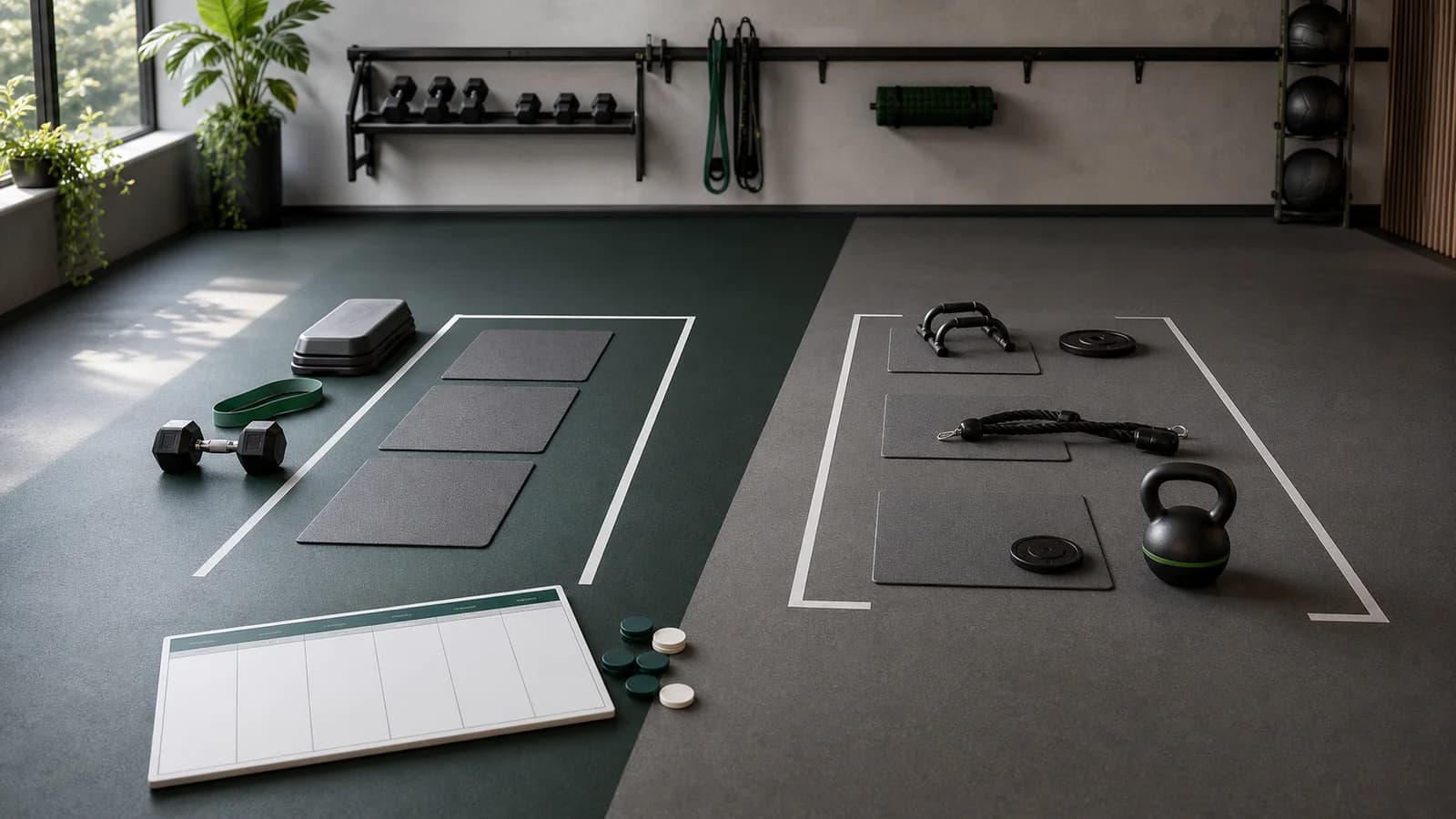
Most beginners do not need the perfect split. They need a week they can repeat when work, study, family, soreness, and crowded equipment interfere. Full body vs push pull legs is a useful choice only when it helps you train each major area often enough, recover before the next repeat, and keep the log readable.
Quick answer: start with the split your week can repeat
If you can train 2 or 3 days, choose full body first. It lets every session touch legs, push, and pull, so one missed day does not erase a whole muscle group. That matches the World Health Organization floor of strengthening major muscle groups on 2 or more days a week, and it gives beginners more practice with fewer moving parts. If that is your first month, pair it with a simple first week gym routine before adding a more detailed split.
Push pull legs makes more sense when you can train 4 to 6 days most weeks and recover from the extra session count. The American College of Sports Medicine position stand lists 2-3 days per week for novice training, then 3-4 for intermediate and 4-5 for advanced lifters. The practical point is not that beginners are forbidden from PPL; it is that the schedule should earn complexity after attendance is reliable.
Comparison table: what each split is really good at
Full body spreads the important work across fewer sessions. It is forgiving, easy to restart after a missed day, and good for learning the same lifts often. The tradeoff is that each session can feel longer, and you have to be selective: one squat or hinge, one push, one pull, and a small accessory are usually enough. The better exercise choice is the version you can repeat cleanly, which is why the machines vs free weights beginner rule matters more than gym identity.
Push pull legs separates stress by movement job: push muscles on one day, pulling muscles on another, legs on another. It can make sessions shorter and mentally cleaner because the day has one theme. The tradeoff is calendar risk. Miss leg day twice, and the split stops being balanced. Miss a pull day, and your back work may drift while pressing keeps moving. PPL rewards consistent attendance; it punishes chaotic weeks.
A useful comparison table is simple: choose full body when you have 2-3 dependable days, want more lift practice, and need a plan that survives missed sessions. Choose PPL when you have 4-6 dependable days, enjoy shorter focused sessions, and can keep push, pull, and legs rotating even when life interrupts. If either choice makes you skip more, it is the wrong choice for now.
Choose your phone
Put this advice into your next workout
Track the sets, loads, and progress behind what you just learned—without rebuilding the plan from memory.
iOS is available now. Android launch notifications are open.
Decision rule: choose by recovery and missed-day cost
Use this decision rule before copying a split from someone stronger: if missing one workout would leave a muscle group untouched for the week, the split is too fragile. Full body reduces that risk because every session gives a small dose to the whole body. PPL raises the risk because the week is built from separate pieces. A beginner who trains Monday full body, Wednesday full body, and Saturday full body has three chances to practice. A beginner who trains push Monday, pull Wednesday, and misses legs Friday has a hole.
Recovery is the second filter. If the same movement is still sore, weaker, or less coordinated 48 to 72 hours later, the plan may be too much for your current base. That does not mean you failed; it means the split is giving more fatigue than useful signal. The right beginner plan should make next week easier to judge, not turn every session into damage control.
Example week: make the split prove itself
For a full-body beginner week, use three sessions: Day 1 squat pattern, press, row, and core; Day 2 hinge pattern, pulldown, incline press, and carry; Day 3 leg press or lunge, chest-supported row, shoulder press, and easy arm work. Keep most sets two or three reps short of failure, write down the loads, and repeat the same pattern for at least two weeks before changing everything.
For a PPL beginner week, use a six-day template only if the sessions can stay moderate: push, pull, legs, rest, push, pull, legs or a rolling version across two weeks. If school, shifts, or family regularly cut the week to three visits, use full body instead. If the gym is crowded, the split also needs sensible swaps; the exercise order guide for a busy gym keeps one unavailable station from wrecking the whole day.
Track the split before you judge the split
Do not judge full body or push pull legs after one exciting workout. Judge it after 2 weeks of attendance, soreness, performance, and mood. In a training plan log you can review, the useful habit is logging the plan you meant to do, the sets you actually did, and any missed-day reason. That turns the split from a label into evidence: did your legs get trained, did pressing move up, did rows repeat, and did the week stay recoverable?
When the log is clear, progression becomes calmer. If all full-body sessions are repeatable and loads are moving, stay with it. If sessions are too long but attendance is strong, try upper/lower or PPL. If PPL feels exciting but one day keeps disappearing, simplify before you blame motivation. A split should organize training; it should not create guilt for a week your calendar could never support.
Sources
- WHO physical activity guidance: 2 or more strengthening days.
- ACSM position stand: 2-3 novice resistance-training days per week.
- Frequency meta-analysis: weekly volume matters more than frequency alone.
Choose your phone
Keep training with the app
Track every set, follow smarter progressions, and bring your workout plan with you when you leave the article.
iOS is available now. Android launch notifications are open.