Lagging Muscle First in Workout: Put the Priority Lift Where It Can Win
Move one lagging muscle's key lift to the first slot for a short test only when it needs a cleaner performance signal.
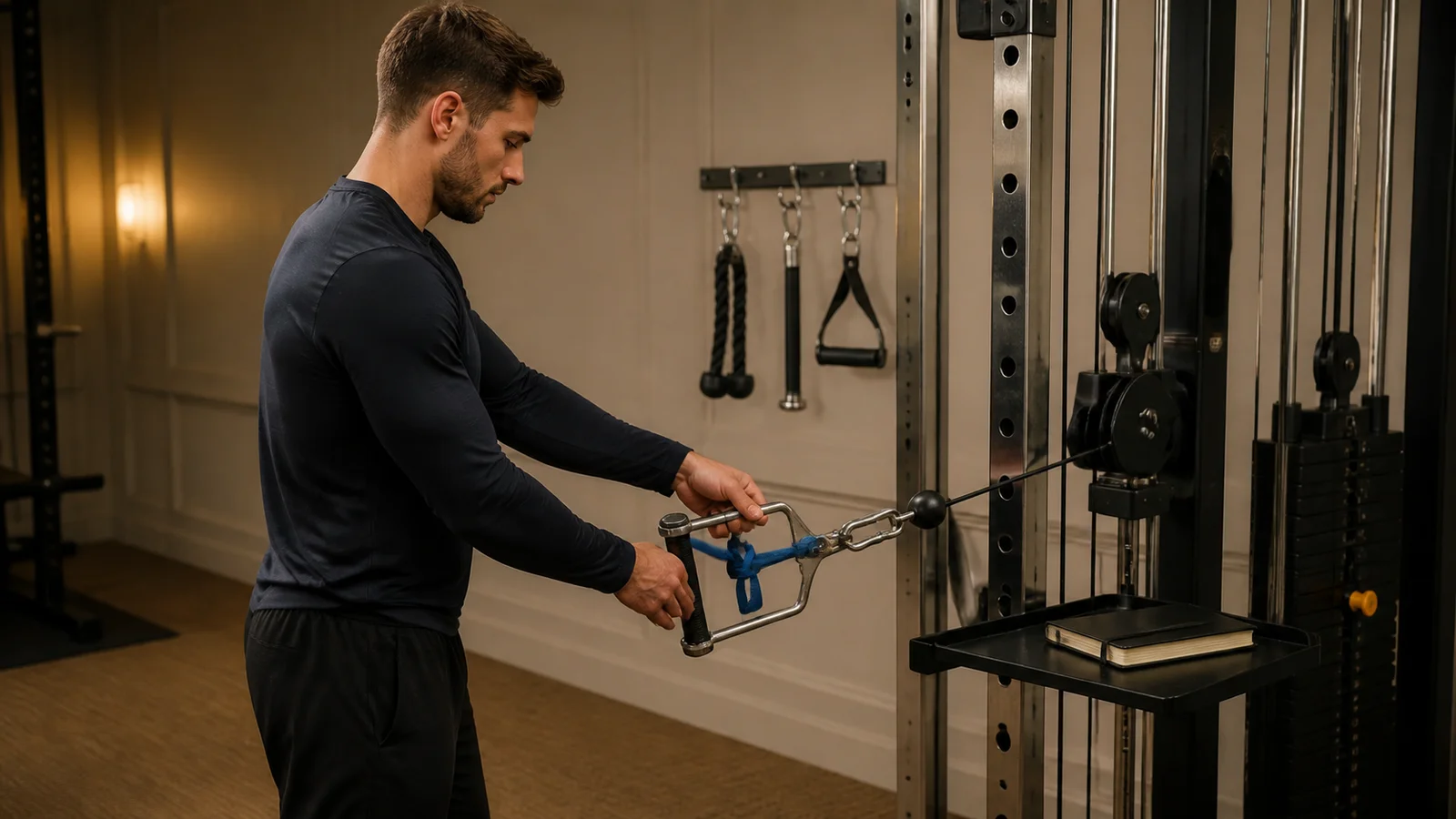
If one muscle keeps lagging, the first fix is not a dramatic new split. It is a cleaner signal. The lift you put first usually gets the freshest attention, the most stable technique, and the best chance to show whether the target muscle can actually progress. Put the lagging muscle first only when that lift is important enough to test, then keep the rest of the workout stable so the comparison means something.
Checklist: When the Lagging Muscle Goes First
Use the first slot when a lagging muscle has one measurable lift that is always buried after draining work. A weak upper back may deserve a chest-supported row before pulldowns and curls. A stubborn upper chest may deserve an incline press before flat pressing. A quad that never gets a clear signal may deserve the main squat or leg press first, not after every accessory. The rule is priority, not novelty: move one lift, not the entire identity of the workout.
Do not move the lift first if the real problem is too little weekly work, poor effort, or random exercise changes. If the muscle is getting only a few hard sets, fix the dose with the minimum effective volume guide before blaming exercise order. If the muscle already gets enough work but its key lift always suffers from fatigue, order is a fair lever to test.
Research Translation: Why the First Slot Changes the Signal
Exercise order mainly changes performance. A 2021 systematic review and meta-analysis found that strength gains were largest for exercises trained early in the session, while the combined hypertrophy effect was not clearly different. That does not make first position magic for muscle size. It means the first lift usually gets better force output, cleaner practice, and a more readable progression signal.
The 2012 exercise-order review by Simão and colleagues reached the practical gym conclusion: total repetitions and volume tend to be greater for the exercise placed first, and strength increases are greater for exercises performed earlier. Research translation: use order to improve the performance signal, not to promise automatic size. The Nunes review reported an approximately 0.03 x hypertrophy effect estimate, and Avelar's 36 participants trained for 6 weeks with both tested orders improving biceps thickness similarly. ACSM's resistance-training position stand still favors sequencing that preserves intensity, so a lagging-muscle block should override the default only because you are deliberately making that lift the priority.
Choose your phone
Put this advice into your next workout
Track the sets, loads, and progress behind what you just learned—without rebuilding the plan from memory.
iOS is available now. Android launch notifications are open.
Pick One Priority Lift, Not a Whole New Workout
Choose one lift that represents the lagging muscle clearly. It should be stable, repeatable, and easy to log: incline dumbbell press for upper chest, chest-supported row for mid back, leg press for quads, seated leg curl for hamstrings, or cable lateral raise for side delts. If the movement is too technical, too painful, or too dependent on equipment you rarely get, it is a bad test lift even if it targets the right muscle.
Keep the rep target boring enough to compare. If the lift moves first and the rep range changes at the same time, you will not know which variable helped. Use the rep range for muscle growth guide to choose a range that fits the exercise, then hold that range for the test block. Most priority lifts work best when the target muscle fails before grip, balance, or joint discomfort takes over.
Scenario Map: Chest, Back, Legs, and Arms
For chest, put the lagging press or fly first, not every chest movement. If upper chest lags, incline press first for two weeks, then continue the normal chest work. For back, put the row or pulldown that best matches the missing area first and keep straps, torso angle, and rest consistent. For legs, move the quad or hamstring lift first only if technique stays safe when fresh and later compound work still has enough quality.
For arms or side delts, priority-first often means a stable cable or machine lift before heavier compound work for a short block. That can help the target muscle receive attention before bigger lifts steal grip, shoulder stability, or elbow tolerance. The tradeoff is real: later lifts may dip slightly. That is acceptable if the priority lift improves and the session still supports the larger plan.
Run a Two-Week Log Test
Run the change for two weeks or 2-4 exposures. Log load, reps, form notes, rest time, and how the later workout behaves. In Rukn Fitness set notes and exercise history, mark the priority lift as first for the block and compare it with the same lift from the previous two weeks. Keep sleep, warm-up, and rest roughly normal so the order change is the main thing you are testing.
Keep the change if the priority lift improves without wrecking recovery or making the rest of the workout unreadable. Revert if the lift only feels better once but performance does not move, soreness spills into the next session, or later key lifts collapse. If every week makes you want to rewrite more exercises, use the same workout or change exercises guide before the test turns into uncontrolled variety.
Sources
- Nunes et al. 2021 systematic review and meta-analysis on resistance-training exercise order
- Simão et al. 2012 review on exercise order in resistance training
- ACSM 2009 position stand on resistance training progression models
- Avelar et al. 2019 study comparing multi-joint and single-joint exercise order
Choose your phone
Keep training with the app
Track every set, follow smarter progressions, and bring your workout plan with you when you leave the article.
iOS is available now. Android launch notifications are open.