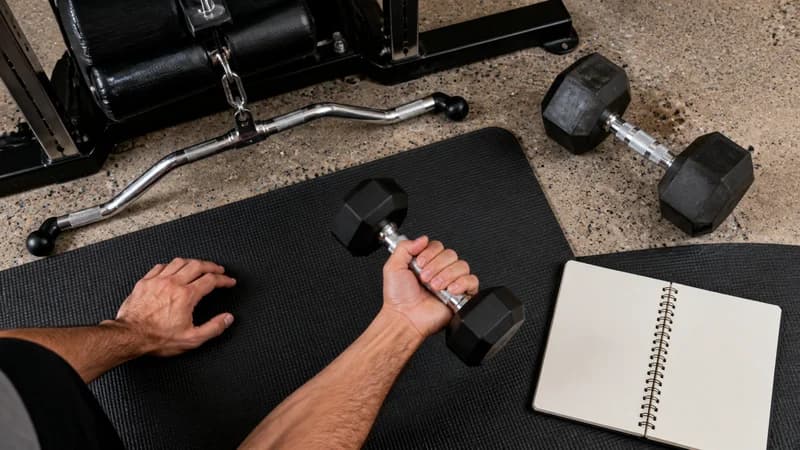
Machine to Free Weights Progression: Graduate One Lift at a Time
Use the machine until the pattern is repeatable, then test one lighter free-weight version while keeping the old machine baseline in your log.
Use the machine until the pattern is repeatable, then test one lighter free-weight version while keeping the old machine baseline in your log.
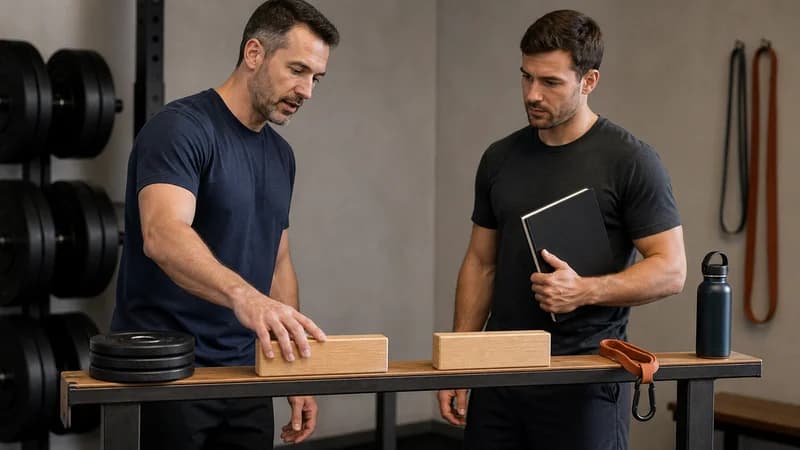
Use supersets to save time without blurring strength progress: pair non-competing moves, protect heavy sets, and check the log.
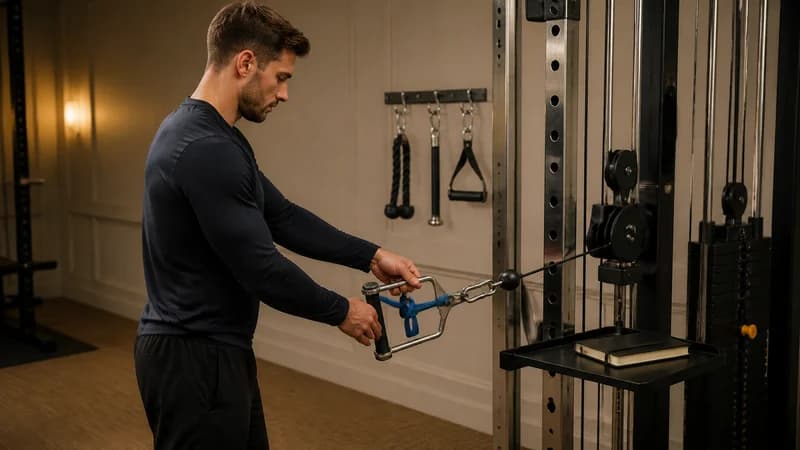
Move one lagging muscle's key lift to the first slot for a short test only when it needs a cleaner performance signal.

Training to failure can help, but muscle growth usually needs hard, readable sets close to failure, not every set forced to zero.
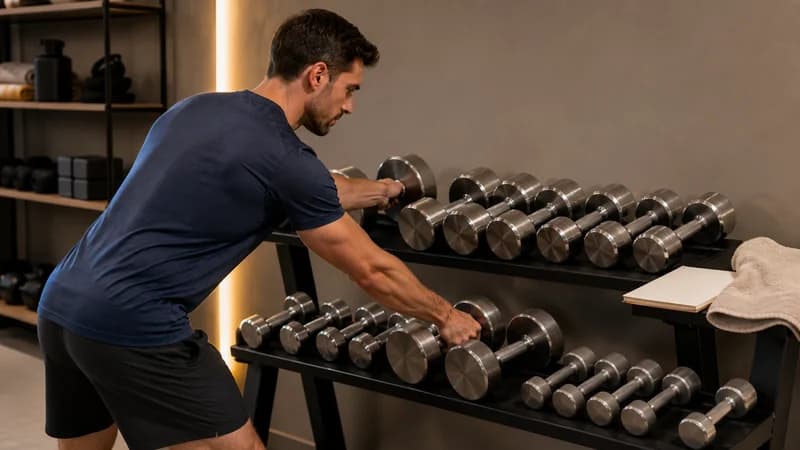
Use rep ranges as a load-selection tool, not a magic rule: choose 5-8, 8-15, or 15-30 reps by exercise, joint comfort, and clean progression.
Use one rest day for a local bad session, and use a deload week when stalled lifts, soreness, and effort problems repeat.
Full range of motion is the best default for counting clean reps, while planned lengthened partials can help when the range is clear and logged separately.
Use a two-week ramp to restart gym training after a break, rebuild momentum, and avoid soreness-driven overcorrection.
Find the smallest weekly hard-set budget that grows muscle without junk volume, recovery debt, or unreadable workout logs.